AI risk management for SMBs helps small and medium-sized businesses reduce operational mistakes and avoid missed jobs by automating oversight across daily workflows. It uses intelligent systems to monitor schedules, detect risks, and trigger timely alerts before issues escalate.
At its core, AI for business error prevention ensures that tasks are completed accurately and on time by analyzing patterns, identifying gaps, and supporting decision-making in real time.
Quick Summary:
- Tracks jobs, deadlines, and responsibilities automatically
- Detects scheduling conflicts and missing data
- Sends reminders to staff and customers
- Flags risks before they impact operations
- Improves efficiency and customer satisfaction
By adopting AI solutions for SMB workflow management, businesses can eliminate common human errors, maintain consistency, and scale operations with confidence.
What Is AI Risk Management?
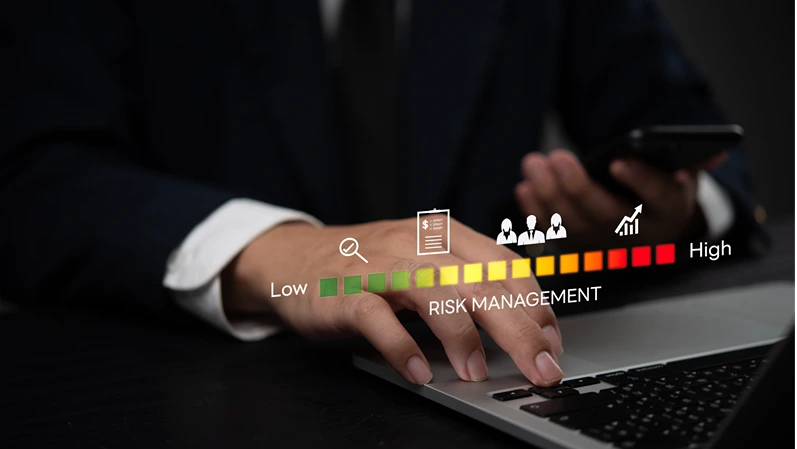
AI risk management refers to the use of artificial intelligence to identify, assess, and mitigate risks in business operations. For SMBs, this often means leveraging SMB automation tools and intelligent systems to ensure that workflows run smoothly without disruptions.
Unlike traditional approaches that rely heavily on manual oversight, automated risk management for service businesses uses data-driven insights to anticipate problems before they occur.
These systems can:
- Analyze historical job data
- Monitor real-time operations
- Identify anomalies or inefficiencies
- Recommend corrective actions
With AI job management software, businesses gain a centralized platform that tracks every job, employee task, and customer interaction, reducing the likelihood of missed steps or delays.
How AI Prevents Missed Jobs and Errors
Understanding how AI prevents missed jobs for SMBs starts with looking at how it integrates into daily operations.
Step-by-Step Workflow
- AI monitors all scheduled jobs and deadlines
Every task, appointment, or service request is tracked in real time. - Detects potential conflicts or missing information
AI identifies double bookings, incomplete job details, or resource shortages. - Sends automatic reminders to staff and clients
Notifications ensure everyone stays informed and prepared. - Flags issues before they impact service delivery
Managers receive alerts when risks arise, allowing quick intervention. - Provides reporting to help managers optimize workflows
Data insights highlight inefficiencies and opportunities for improvement.
This structured approach is a prime example of using AI to reduce operational errors in small businesses, especially those handling multiple jobs daily.
Benefits for SMBs
Implementing AI tools to streamline SMB operations delivers measurable advantages:
- Reduced human error
Automation minimizes manual input mistakes. - Fewer missed appointments
Intelligent reminders and tracking eliminate scheduling gaps. - Streamlined scheduling and task management
Centralized systems improve coordination across teams. - Increased client satisfaction
Reliable service builds trust and loyalty. - Better reporting for decision-making
Real-time analytics support smarter business strategies.
AI vs Traditional Risk Management for SMBs
This comparison highlights why more businesses are shifting toward AI solutions for SMB workflow management to stay competitive.
Case Study: Preventing Missed Jobs in a Service Business
Scenario
A small HVAC company manages 25 to 40 service calls daily. Before adopting AI, they relied on spreadsheets and manual scheduling.
Challenges
- Frequent missed appointments
- Double bookings
- Poor communication between dispatch and technicians
- Customer complaints and lost revenue
After Implementing AI
By integrating AI job management software, the company automated scheduling, reminders, and job tracking.
Results
Before:
- 15 percent missed or delayed jobs
- High administrative workload
- Inconsistent customer experience
After:
- Less than 3 percent missed jobs
- Improved staff productivity
- Increased customer retention
This real-world example demonstrates the power of automated risk management for service businesses in delivering consistent results.
Why AI Risk Management Works
The effectiveness of AI lies in its ability to process large volumes of data quickly and accurately.
Key Components
- Machine learning algorithms
Learn from past data to predict risks - Automation engines
Execute tasks without manual intervention - Real-time monitoring systems
Provide instant visibility into operations - Predictive analytics
Anticipate issues before they occur
Together, these elements enable AI for business error prevention to go beyond simple automation and deliver strategic value.
Best Practices for SMBs Using AI Risk Management
To maximize the impact of AI risk management for SMBs, businesses should follow proven strategies:
- Integrate AI with existing scheduling tools to avoid duplication
- Set up automated alerts and reminders for all critical tasks
- Review AI insights regularly to optimize workflow and reduce bottlenecks
- Train staff on AI tools to ensure proper adoption
- Prioritize high-risk areas such as missed jobs and delayed tasks
These practices ensure that SMB automation tools are used effectively and deliver long-term benefits.
Tips to Maximize Efficiency With AI
Beyond basic implementation, SMBs can unlock more value by refining their approach:
- Combine AI risk management with automated quoting and follow-ups
- Use AI reports to predict trends and staffing needs
- Implement AI dashboards to track real-time performance
- Regularly review error logs and alerts to continuously improve operations
Businesses that adopt these strategies often see significant improvements in productivity and profitability through AI tools to streamline SMB operations.
Common Mistakes to Avoid
While AI offers powerful capabilities, improper use can limit its effectiveness.
Avoid These Pitfalls
- Over-reliance on automation without oversight
Human review remains important for critical decisions - Lack of staff training
Employees must understand how to use AI systems effectively - Ignoring data quality
Poor data leads to inaccurate insights - Failing to update workflows
AI systems should evolve alongside business processes
Addressing these issues ensures that using AI to reduce operational errors in small businesses delivers consistent results.
The Role of Platforms Like Leapify
As SMBs adopt AI-driven solutions, platforms like Leapify are helping streamline implementation. These tools combine scheduling, automation, and analytics into one system, making it easier for businesses to adopt AI solutions for SMB workflow management without complex setups.
By integrating multiple functions into a single platform, businesses can manage risks, reduce errors, and improve efficiency with minimal effort.
Future Trends in AI Risk Management
The evolution of AI continues to expand its role in SMB operations.
Emerging Trends
- Predictive scheduling: AI anticipates demand and adjusts staffing automatically
- Voice-enabled task management: Hands-free interaction improves accessibility
- Advanced customer insights: Personalization enhances service quality
- Integration with IoT devices: Real-time data from equipment improves decision-making
These innovations will further strengthen automated risk management for service businesses, making AI an essential tool for growth.
Building a Smarter, Error-Free SMB With AI
AI is no longer a luxury reserved for large enterprises. It has become a practical and accessible solution for SMBs aiming to improve efficiency and reduce costly mistakes.
By implementing AI risk management for SMBs, businesses can prevent missed jobs, streamline workflows, and deliver consistent service. The combination of automation, real-time monitoring, and predictive insights allows companies to operate with greater confidence and precision.
Solutions like Leapify make it easier than ever to adopt AI-driven systems, empowering SMBs to scale operations while maintaining control and accuracy. As competition grows, businesses that invest in AI will be better positioned to succeed. Request a demo today!
References
- U.S. Small Business Administration – AI for Small Business
https://www.sba.gov/business-guide/manage-your-business/ai-small-business - McKinsey & Company – Superagency in the Workplace: Unlocking AI’s Potential
https://www.mckinsey.com/capabilities/tech-and-ai/our-insights/superagency-in-the-workplace-empowering-people-to-unlock-ais-full-potential-at-work - McKinsey & Company – The State of AI 2025 Global Survey
https://www.mckinsey.com/capabilities/quantumblack/our-insights/the-state-of-ai - Deloitte Insights – AI for Business: APAC Trends in AI Platform Adoption
https://www.deloitte.com/southeast-asia/en/services/consulting/analysis/ai-business-apac-trends-platform-adoption.html - Small Business Digital Alliance – AI and U.S. SMBs 2024 Report (PDF)
https://www.smallbusinessdigitalalliance.com/wp-content/uploads/2024/01/AI-and-US-SMBs-2024-Report.pdf - Business.com – 2026 Small Business AI Outlook Report
https://www.business.com/articles/ai-usage-smb-workplace-study/
FAQs
What is AI risk management for SMBs?
AI risk management for SMBs involves using artificial intelligence to identify, monitor, and prevent operational risks such as missed jobs or scheduling errors. It automates workflows and provides real-time alerts to improve efficiency and accuracy.
Can AI really prevent missed appointments?
Yes, AI systems track schedules, send reminders, and detect conflicts automatically. This significantly reduces the chances of missed appointments by ensuring all tasks are properly managed and communicated.
Is AI suitable for small businesses?
AI is highly suitable for small businesses due to the availability of scalable and affordable tools. Many SMB automation tools are designed specifically to meet the needs of smaller teams without requiring complex infrastructure.
How does AI reduce human error?
AI reduces human error by automating repetitive tasks, validating data, and providing real-time alerts. This minimizes manual input mistakes and ensures that workflows remain consistent.
Can AI improve business revenue?
Yes, AI can improve revenue by increasing efficiency, reducing missed opportunities, and enhancing customer satisfaction. Businesses that use AI job management software often experience higher productivity and better client retention.
What industries benefit most from AI risk management?
Service-based industries such as HVAC, cleaning, landscaping, and healthcare benefit greatly. These businesses rely heavily on scheduling and task management, making AI tools to streamline SMB operations especially valuable.