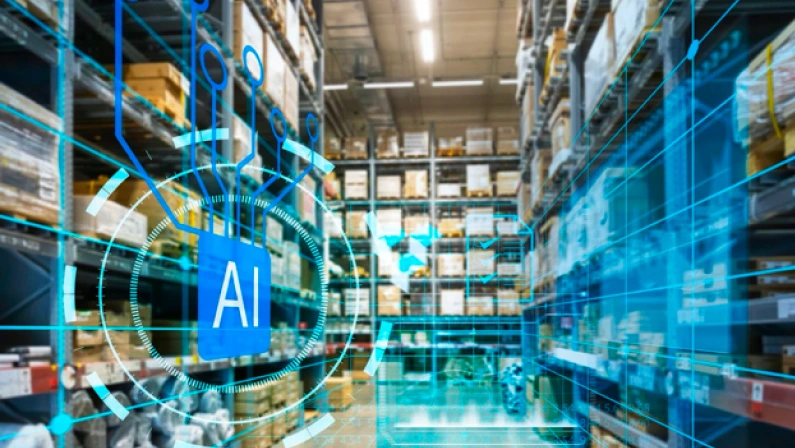
Artificial intelligence is reshaping the way businesses handle supply chains and inventory operations. Companies are no longer relying solely on manual tracking and human intuition to manage stock levels. Instead, AI inventory management is emerging as a powerful solution that drives accuracy, efficiency, and cost savings. From predictive inventory management to AI-based inventory optimization, artificial intelligence in inventory management is becoming essential for businesses of all sizes.
With AI and inventory management technologies, companies can process massive amounts of data in real time, reducing errors, avoiding stockouts, and anticipating demand fluctuations. The integration of AI into inventory systems is not just a trend. It represents a strategic shift toward smarter, data-driven decision-making that can give businesses a competitive edge.
What Does AI Inventory Management Mean for Modern Supply Operations?
AI inventory management refers to the use of artificial intelligence systems to track, control, and optimize inventory processes across warehouses, stores, and distribution networks. Unlike traditional methods, which rely on manual entry and periodic audits, AI-based inventory management leverages machine learning algorithms, predictive analytics, and real-time data monitoring to streamline operations.
Modern supply operations benefit from AI through improved accuracy, faster decision-making, and reduced operational costs. AI inventory optimization ensures that businesses maintain optimal stock levels, minimizing waste while meeting customer demand efficiently. Companies using AI in inventory management can respond quickly to market trends and unexpected supply chain disruptions.
How Can AI Help With Inventory Management More Effectively?

How is AI used in inventory management? AI is transforming inventory management by automating critical processes and providing actionable insights. Understanding its specific benefits helps businesses improve accuracy, efficiency, and decision-making.
Enhanced Accuracy
AI minimizes human error by automating data entry, inventory counting, and stock tracking. This ensures precise reporting and reliable inventory records.
Real-Time Visibility
Businesses can monitor inventory levels across multiple locations in real time. This allows immediate adjustments and reduces the risk of stockouts or overstocking.
Predictive Insights
AI inventory forecasting helps anticipate demand trends and purchasing needs, allowing businesses to prepare for peak seasons or unexpected changes in customer behavior.
Operational Efficiency
AI reduces the time and labor needed to manage inventory manually. Automated systems free staff to focus on strategic tasks rather than repetitive work.
Which Inventory Challenges Can AI Solve More Efficiently Than Manual Methods?
Manual inventory management often struggles with errors, inefficiencies, and delays. AI addresses these challenges by offering precision, predictive insights, and process automation.
Stockouts and Overstock
AI inventory optimization identifies optimal reorder points, reducing the risk of empty shelves or excessive storage costs.
Complex Multi-Location Management
AI provides centralized oversight for inventory spread across multiple warehouses, simplifying coordination and reducing discrepancies.
Forecasting Accuracy
AI inventory forecasting improves demand prediction by analyzing numerous variables beyond human capability, leading to better purchasing decisions.
Waste Reduction
AI minimizes expired or obsolete inventory by ensuring that stock turnover aligns with actual consumption and demand trends.
How Can AI Predict Inventory Needs Before They Impact Your Operations?

AI anticipates inventory requirements before stockouts or overstock situations occur. Predictive capabilities allow businesses to plan proactively and maintain smooth operations.
Historical Data Analysis
AI systems process years of sales and stock data to identify patterns and predict future requirements accurately.
Seasonal Trend Monitoring
Predictive inventory management tools anticipate seasonal spikes or drops in demand, allowing proactive adjustments.
Market Dynamics Evaluation
AI monitors market conditions, competitor activity, and customer behavior to forecast potential changes in product demand.
Real-Time Alerts
AI can provide instant notifications about low stock or potential shortages, enabling timely action before disruptions occur.
What AI Tools and Technologies Drive Smarter Inventory Decisions?
AI uses a combination of algorithms, sensors, and analytics tools to inform better inventory choices. Understanding these technologies highlights the drivers behind smarter, data-driven decisions.
Machine Learning Algorithms
Machine learning powers predictive insights and continuously improves forecasting accuracy by learning from new data.
Cloud-Based Inventory Systems
Cloud platforms enable centralized inventory tracking and AI integration, offering flexibility and real-time data access.
IoT Sensors
IoT devices track stock levels and movement, feeding real-time data to AI systems for more precise inventory management.
Data Analytics Dashboards
Intuitive dashboards translate AI-driven insights into actionable strategies for procurement, warehousing, and sales planning.
How Does AI Help Optimize Warehouse Operations and Reduce Costs?
AI enhances warehouse efficiency by automating tasks and optimizing space and workflows. Companies can reduce operational costs while increasing throughput and accuracy.
Automated Stock Tracking
AI-based inventory management reduces manual labor costs through automated scanning, counting, and reporting of inventory.
Space Optimization
AI inventory optimization analyzes storage layouts and stock rotation to maximize warehouse space efficiency.
Workflow Streamlining
AI schedules and prioritizes tasks such as picking, packing, and shipping, reducing delays and improving operational throughput.
Cost Reduction
By reducing stockouts, overstocks, and inefficiencies, AI helps lower holding costs and enhances overall profitability.
How Can Businesses Use AI to Balance Inventory Levels More Strategically?
Balancing inventory requires careful analysis of demand, stock levels, and supply patterns. AI provides the insights and automation needed to maintain this balance consistently.
Dynamic Reordering
AI monitors stock levels in real time and adjusts reorder points dynamically, maintaining an optimal balance of supply and demand.
Demand Segmentation
AI inventory forecasting segments demand by region, customer type, or product line, enabling precise inventory allocation.
Scenario Planning
AI simulates different supply chain scenarios to determine optimal strategies under various market conditions.
Performance Monitoring
AI tracks inventory KPIs, allowing managers to make data-driven adjustments for long-term operational efficiency.
What Are the Best Practices for Implementing AI Inventory Management Successfully?
Successful AI adoption requires planning, training, and integration with existing systems. Following best practices ensures businesses achieve maximum benefits from AI inventory management.
- Start Small: Pilot AI-based inventory management with a single product line or warehouse before scaling.
- Integrate with Existing Systems: Ensure AI integrates seamlessly with ERP, CRM, and other business tools for unified operations.
- Train Staff: Educate employees on how AI and inventory management tools work to maximize adoption and effectiveness.
- Continuous Improvement: Regularly evaluate AI performance, refine algorithms, and update predictive models for ongoing optimization.
How Do You Measure the ROI and Performance of AI-Driven Inventory Management?
Measuring ROI helps determine the effectiveness of AI investment in inventory management. Tracking key metrics ensures businesses can quantify performance improvements and cost savings.
- Key Metrics to Track: Monitor stock turnover, order fulfillment rate, forecast accuracy, and holding costs to evaluate AI effectiveness.
- Cost Savings Analysis: Compare operational costs before and after AI implementation to assess financial benefits.
- Time Efficiency: Measure labor hours saved and process improvements resulting from AI automation.
- Customer Satisfaction: Track fulfillment rates and order accuracy to determine the impact of AI on service quality.
How Does Leapify Enhance AI Inventory Management for Growing Businesses?
Leapify combines AI capabilities with inventory management tools to deliver predictive insights and optimization. Understanding its features shows how growing businesses can leverage technology for smarter operations.
Leapify offers an all-in-one platform that leverages AI and inventory management capabilities to provide predictive insights, automation, and optimization tools. Businesses using Leapify can achieve real-time inventory visibility, dynamic reordering, and smarter stock allocation. The platform combines AI-based inventory management, predictive inventory management, and AI inventory forecasting, empowering businesses to minimize waste, prevent stockouts, and optimize costs across multiple locations.
Unlock Smarter Inventory Management with AI and Leapify CRM

AI in inventory management is no longer optional for businesses seeking efficiency, accuracy, and cost savings. From predictive inventory management to AI inventory optimization, artificial intelligence in inventory management offers practical solutions to complex supply chain challenges.
Implementing AI-based inventory management can streamline warehouse operations, improve forecasting, and enhance overall decision-making. Platforms like Leapify CRM bring all these capabilities together, combining AI inventory forecasting, real-time monitoring, and intelligent automation to ensure businesses maintain optimal inventory levels while reducing costs. Contact us today!