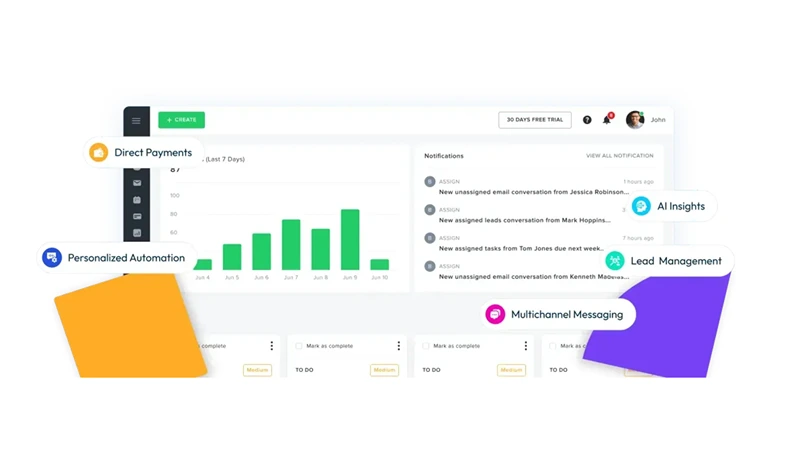
Small and mid-sized businesses are under constant pressure to do more with fewer resources. Managing sales, marketing, customer support, operations, and reporting across disconnected tools creates inefficiencies that slow growth and drain budgets. This is where a modern AI business platform becomes a competitive advantage.
By unifying core business functions into a single system, businesses gain clarity, speed, and control. Instead of juggling multiple dashboards, teams can rely on intelligent automation to handle repetitive tasks, surface insights, and support smarter decisions. The result is a more agile organization built for sustainable growth.
Why SMBs Need a Single AI Platform
SMBs face unique challenges compared to enterprise organizations. Limited staff, tighter margins, and growing customer expectations make manual processes difficult to sustain. Disconnected systems often lead to duplicated work, missed opportunities, and inconsistent customer experiences.
A single AI platform addresses these issues by centralizing workflows and data. It enables AI business automation across departments, allowing teams to focus on strategy and customer relationships rather than administrative work. For SMBs aiming to scale efficiently, this unified approach is no longer optional.
What Is a Single AI Business Platform?
A single AI business platform is an integrated system that combines multiple business functions into one intelligent environment. It uses machine learning and automation to manage workflows, analyze data, and support daily operations.
Unlike standalone tools, an all-in-one AI software solution connects sales, marketing, support, and operations under one roof. This creates a shared source of truth and enables AI-powered business management that adapts as the business evolves. For growing companies, it serves as both an operational backbone and a growth engine.
Core Business Functions You Can Automate With AI

AI platforms or business automation software are designed to handle a wide range of operational tasks. By applying AI workflow automation across departments, SMBs can reduce manual effort and improve consistency.
Sales and Lead Management
AI enhances sales processes by capturing leads, scoring prospects, and automating follow-ups. An AI CRM for SMB centralizes customer data and uses predictive insights to prioritize opportunities. Sales teams gain better visibility into pipelines while spending less time on data entry.
Marketing Automation
With AI marketing automation, campaigns become smarter and more targeted. Platforms analyze customer behavior, segment audiences, and schedule outreach at optimal times. This allows small teams to run sophisticated campaigns that were once limited to large enterprises.
Customer Support
AI-driven support tools route tickets, suggest responses, and identify common issues. This improves response times and ensures consistent service quality. Customers benefit from faster resolutions, while support teams handle higher volumes without burnout.
Operations and Scheduling
AI operations management streamlines internal processes, including task assignments, scheduling, and resource planning. Automation reduces bottlenecks and ensures projects stay on track. Teams gain real-time visibility into workloads and deadlines.
Finance and Reporting
AI simplifies financial oversight by automating invoicing, expense tracking, and performance reporting. Intelligent dashboards highlight trends and anomalies, helping leaders make informed decisions with confidence.
Benefits of Managing Your Business With a Single AI Platform

Adopting a unified platform delivers measurable advantages across the organization. These include:
Increased efficiency and productivity
Automation removes repetitive tasks and reduces context switching. Employees spend more time on high-value work, leading to higher output and morale.
Reduced operational costs
By consolidating tools into a single business automation solution, SMBs reduce software costs and minimize manual effort. AI-driven processes also reduce costly errors.
Improved customer experience
Unified data and automated workflows create consistent interactions across channels. Customers receive timely, relevant communication that builds trust and loyalty.
Data-driven decision-making
Centralized analytics provide clear insights into performance. Leaders can act on real-time data rather than relying on assumptions or outdated reports.
Ability to scale without hiring more staff
AI tools for SMB enable growth without proportional increases in headcount. Automation supports higher volumes of customers and transactions while keeping costs predictable.
How SMBs Can Choose the Right AI Platform
Selecting the right platform requires careful evaluation. Not all solutions are built with small business needs in mind.
- Ease of use and onboarding: The platform should be intuitive, allowing teams to get started quickly without extensive technical support. Simple onboarding reduces resistance and accelerates time to value.
- Integration with existing tools: A strong AI platform integrates seamlessly with existing software to prevent data silos. This ensures operational continuity while enhancing overall efficiency.
- Customizable workflows: Tailoring workflows enables businesses to align automation with their unique processes. Flexible customization supports growth and changing operational needs.
- Built in AI CRM and marketing features: Native CRM and marketing tools enable centralized customer management and automated engagement. This integration improves visibility across the customer journey and drives consistent outreach.
- Transparent pricing and scalability: Clear pricing structures help businesses plan budgets with confidence, avoiding hidden costs. Scalable plans ensure the platform grows alongside the organization without forced upgrades.
Mid-market focused platforms like Leapify stand out by offering small business AI solutions that combine simplicity with advanced automation.
Steps to Implement an AI Platform in Your SMB
Successfully implementing an AI platform requires a structured approach that aligns technology with real business needs. These steps help ensure a smooth transition, strong adoption, and measurable results.
Audit current processes and pain points
Review existing workflows to identify repetitive tasks, bottlenecks, and areas prone to errors. This clarity ensures the AI platform is configured to solve real operational challenges, not add new complexity.
Select the right all-in-one AI solution
Choose a platform that supports core functions like sales, marketing, and operations within a single system. The right solution should scale with the business and offer intuitive automation tailored to SMB needs.
Integrate with existing systems
Connect the AI platform with current tools to maintain data consistency and avoid disruptions. Seamless integration ensures information flows smoothly across departments.
Train your team for adoption
Provide hands-on training so employees understand how AI enhances their daily work. Confidence and familiarity drive consistent usage and long-term success.
Monitor performance and adjust workflows
Track key metrics to evaluate how automation impacts efficiency and results. Continuous optimization allows the platform to evolve alongside business goals.
Building Smarter Growth With an AI Business Platform

AI-powered platforms are transforming how SMBs operate and compete. By unifying tools and automating workflows, businesses gain efficiency, insight, and scalability. A modern AI business platform serves as the foundation for sustainable growth and smarter decision-making.
For SMBs ready to simplify complexity and unlock growth, adopting a single AI platform is a strategic move toward a more intelligent future. Solutions like Leapify CRM demonstrate how a predictive AI CRM can centralize operations, automate engagement, and support long-term success. Request a demo today!