
Creating fresh ads for your Shopify products can take hours, especially when you're promoting multiple items across different platforms. An AI ad generator for Shopify store owners helps speed up the process by turning product information into ready-to-edit images, videos, and advertising copy. Instead of creating every ad manually, you can generate several variations, test different approaches, and spend more time improving your campaigns.
This guide covers how Shopify AI ad creators work, which features matter, and how to use them effectively.
What Is an AI Ad Generator for Shopify Stores?
An AI ad generator for Shopify is a tool that uses artificial intelligence to create promotional content for products sold through Shopify. Depending on the software, it can generate product images, video ads, headlines, descriptions, and other advertising assets using information from your online store.
These tools simplify AI-powered ad creation for ecommerce businesses by reducing repetitive design and copywriting tasks. They can be particularly useful for stores that regularly launch products, update promotions, or advertise across several channels.
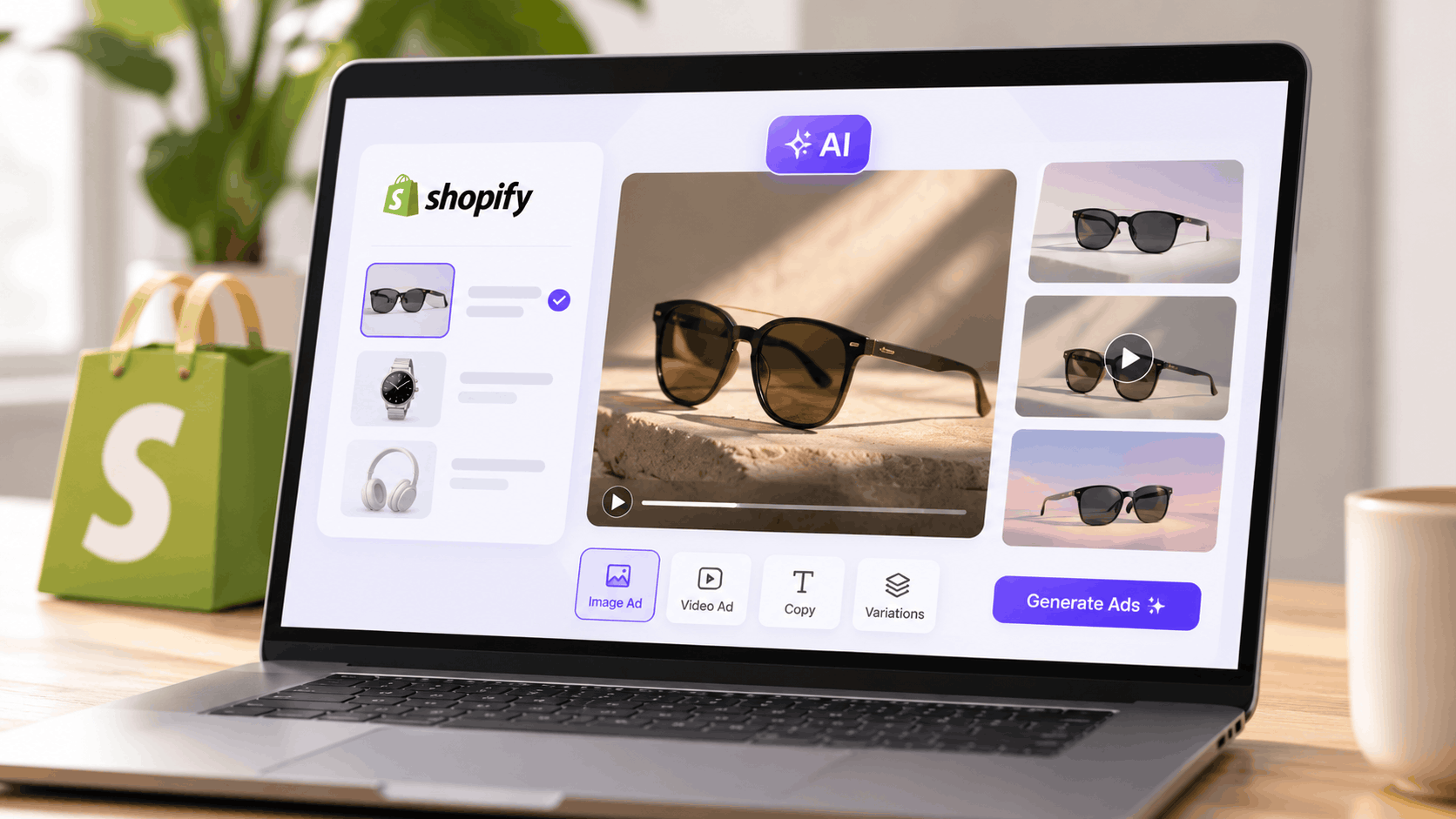
How Does an AI Ad Generator for Shopify Work?
Most AI ad generators use product descriptions, photographs, website URLs, or uploaded assets to understand what you're selling. The software then creates advertising content based on your selected format, audience, and creative preferences.
For example, a Shopify store selling skincare products could provide a product URL and request several Instagram advertisements. A compatible tool might generate lifestyle visuals, benefit-focused headlines, and different calls to action, which the store owner can review before publishing.
Types of Ads Shopify AI Ad Creators Can Generate
A Shopify AI ad creator may support several advertising formats, including static product images, short-form videos, UGC-style content, and promotional copy. Some tools also generate multiple creative variations or resize advertisements for different placements.
Available features vary between platforms, so it's important to check what each tool actually supports before choosing one.
Why Shopify Stores Should Use an AI Ad Generator
Managing an online store already involves inventory, customer service, fulfillment, and marketing. AI advertising tools can reduce some of the production work involved in keeping campaigns active.
Reduce the Time Required to Create Advertising Campaigns
Traditional ad creation often requires separate steps for writing copy, designing visuals, and preparing platform-specific formats. AI tools can combine several of these tasks into a faster workflow.
A store owner promoting five new products, for example, could generate initial creative concepts for each item without building every advertisement from scratch.
Lower Advertising Creative Production Costs
AI can reduce expenses associated with repetitive design, copywriting, and editing tasks. Small businesses may find it particularly useful when they need multiple variations but have limited production resources.
However, software subscriptions, human editing, and professional creative work may still be necessary. The actual savings depend on how frequently the business produces advertisements.
Scale AI Ads for Shopify Stores Across Multiple Platforms
Shopify businesses often advertise through Facebook, Instagram, TikTok, and Google. Each platform has different creative requirements, making manual production time-consuming.
AI ads for Shopify stores can be adapted into different sizes, formats, and messaging styles, helping businesses maintain a consistent advertising presence across channels.
Improve Creative Testing and Advertising Performance
Creating several advertisements makes it easier to test different product benefits, visuals, and calls to action. Instead of relying on one creative concept, businesses can compare variations and identify which ones generate meaningful results.
AI makes producing these alternatives faster, although performance improvements still depend on testing, targeting, and campaign management.
Maintain Brand Consistency Across Advertising Campaigns
Many AI advertising tools allow businesses to apply brand colors, fonts, logos, and creative guidelines. These settings help maintain a recognizable appearance when generating multiple advertisements.
Consistent branding also makes campaigns easier for customers to recognize across different platforms.
Key Features to Look for in an AI Ad Generator for Shopify Stores
Not every AI advertising tool offers the same capabilities. Understanding the available features helps you choose software that fits your products and marketing workflow.
Product URL-to-Ad Generation
Product URL-to-ad generation allows compatible tools to use information from a product page to create advertising content. Instead of manually entering every detail, you can provide a Shopify product URL and let the software extract supported information.
Check generated outputs carefully, especially when products have multiple variants, changing prices, or specific technical details.
AI Product Image Generation
AI image generation can help create lifestyle backgrounds, promotional scenes, and alternative layouts using existing product photographs. This is useful when a business needs several visual concepts without organizing a separate photoshoot for every campaign.
Generated images should accurately represent the product's actual appearance, dimensions, and features.
AI Video Ad Creation
AI video tools can help transform product images, descriptions, and existing footage into short promotional clips. Depending on the platform, features may include animation, captions, voiceovers, and automated editing.
Video ads are particularly useful for demonstrating how a product works or showing its practical benefits.
AI UGC Ad Generation
UGC-style advertisements use a casual, social-media-friendly presentation similar to everyday product reviews and demonstrations. AI can assist with scripts, editing, and synthetic video production.
Businesses should clearly distinguish fictional or synthetic presentations from genuine customer testimonials and follow applicable platform disclosure requirements.
Automated Ad Copy and Headline Generation
An AI ad generator can produce headlines, product descriptions, captions, and calls to action using your product information. This gives businesses several messaging options without manually drafting every variation.
For example, a fitness accessories store could test advertisements emphasizing durability, portability, or ease of use.
Multiple Ad Formats and Creative Variations
Look for tools that support the formats your business actually uses, such as square images, vertical videos, and different social advertising placements. The ability to generate variations from existing assets is also valuable for ongoing testing.
Having multiple options makes it easier to refresh campaigns without rebuilding everything.
Brand Customization and Creative Editing
AI-generated content often needs adjustments before publication. Choose software that allows you to edit text, replace images, adjust layouts, and apply brand guidelines.
Good editing controls help keep advertisements accurate, recognizable, and appropriate for your customers.
Read more: How AI Image Generation Is Changing Digital Advertising
How to Use an AI Ad Generator for Shopify Stores: Step-by-Step Guide
Getting started with Shopify ad automation is easier when you follow a repeatable process. These steps can help you move from product information to a live advertising campaign.
Step 1: Choose an AI Ad Generator for Your Shopify Store
Start by comparing tools based on your advertising goals, preferred formats, and budget. Check whether they support Shopify product URLs, catalog integrations, or manual product uploads.
If possible, test the software with an actual product before committing to a subscription.
Step 2: Upload Your Product Information or Shopify Product URL
Provide accurate product photographs, descriptions, prices, and selling points. Some AI tools can import information from a Shopify URL, while others require manual uploads or integrations.
Review the imported details before generating advertisements to prevent inaccurate product claims.
Step 3: Select Your Advertising Format
Choose the format that fits your campaign, such as an Instagram image, TikTok-style video, or product promotion for Facebook. Consider how your audience uses each platform and what information the advertisement needs to communicate.
For example, a product demonstration may work better as a short video, while a limited-time promotion might benefit from a simple image ad.
Step 4: Generate AI Advertising Creatives
Use the tool to create several concepts with different visuals, headlines, or product benefits. Give specific instructions about your audience, tone, and desired message rather than relying on generic prompts.
Review the results and select the variations that communicate your product's value most clearly.
Step 5: Customize Your Shopify Advertising Creatives
Adjust the generated advertisements to match your brand identity. Check spelling, product details, visual accuracy, and promotional claims before approving the content.
Make sure the advertisement also matches the product page customers will visit after clicking.
Step 6: Export and Launch Your AI Ads
Export the approved assets in the required sizes and formats, then upload them to your advertising platform. Some tools may support direct publishing or integrations, but this depends on the software.
Set your campaign objectives, audience parameters, and budget before launching.
Step 7: Monitor and Optimize Advertising Performance
Once your ads are running, review click-through rates, conversion rates, cost per purchase, and return on ad spend. Compare creative variations to understand which messages and visuals are performing well.
Use these findings to improve future advertisements rather than generating new content without a clear reason.
Best Practices for Creating High-Converting AI Ads for Shopify Stores
AI makes ad creation faster, but effective advertisements still depend on accurate information, strong messaging, and thoughtful testing.
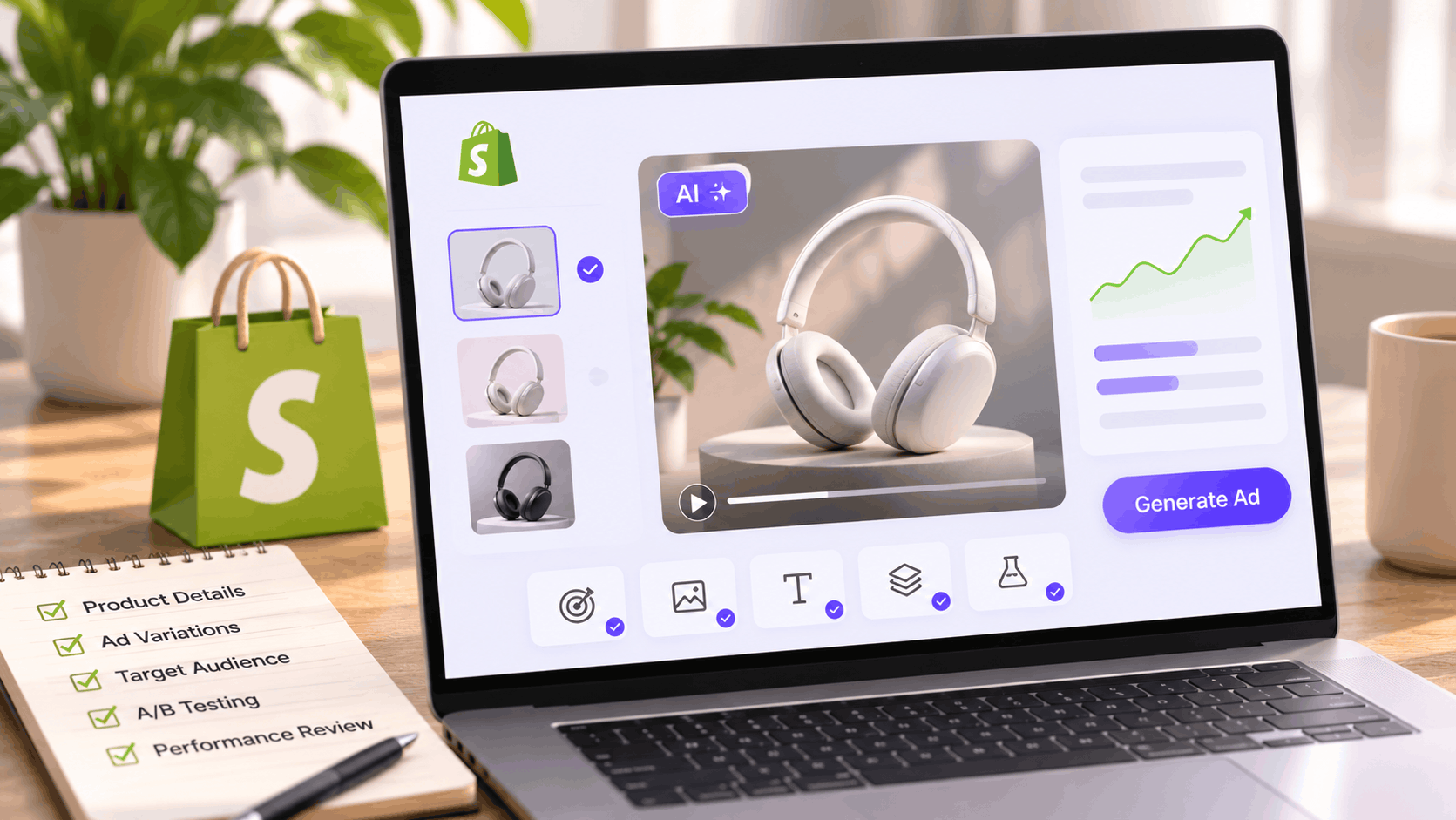
Use High-Quality Product Images and Accurate Information
Clear product photographs and complete descriptions give AI tools better material to work with. Poor-quality images or missing specifications can lead to advertisements that look unprofessional or misrepresent what you're selling.
Use current product information and verify generated content before publication.
Create Strong Advertising Hooks
Your advertisement needs to communicate something relevant quickly, especially on social media. Focus on a customer problem, a practical benefit, or a specific reason someone might be interested in your product.
For example, a travel organizer brand might open with a message about keeping essentials accessible instead of simply announcing a new product.
Focus on Product Benefits Instead of Features Alone
Product specifications matter, but customers also want to understand how an item fits into their lives. Use AI to explore messaging that connects product features with practical advantages.
Instead of only mentioning that a backpack has several compartments, explain how those compartments help organize everyday essentials.
Create Platform-Specific Advertising Creatives
An advertisement that works on Instagram may not perform the same way on TikTok or Google. Adapt your creative style, length, and messaging to the platform rather than publishing identical content everywhere.
AI can help generate these variations while keeping your core product information consistent.
Test Multiple AI-Generated Ad Variations
Create several advertisements that test different headlines, visuals, or calls to action. Compare results using consistent campaign objectives and sufficient performance data.
Focus on meaningful differences so you can understand which creative choices influence customer responses.
Refresh Advertising Creatives Regularly
Repeated exposure to the same advertisement can eventually reduce engagement. Monitor performance and introduce new variations when existing creatives begin losing effectiveness.
AI makes it easier to refresh visuals and messaging without restarting the entire production process.
Read more: How Small Businesses Can Use AI Advertising
Creative Production Time
AI generators can produce initial concepts quickly, making them useful for frequent promotions and product launches. Traditional production generally takes longer but may be preferable for complex campaigns requiring original photography or highly specific creative execution.
Advertising Production Costs
AI tools can reduce the cost of producing repeated variations, while traditional workflows may involve designers, photographers, or video editors. Businesses should compare total expenses, including subscriptions, editing, and quality control.
Creative Scalability
Shopify stores with large inventories may benefit from AI-generated templates and bulk creative production. Traditional methods can still support scaling, but they often require additional production capacity.
Customization and Creative Control
Traditional software provides direct control over detailed design decisions. AI generators offer speed and convenience, although their editing flexibility varies.
Many businesses combine both approaches to balance efficiency with creative quality.
Advertising Performance Optimization
Neither method automatically guarantees better advertising performance. AI makes it easier to create test variations, but results still depend on campaign strategy, audience relevance, and conversion tracking.
Common Mistakes to Avoid When Using a Shopify AI Ad Creator
AI can simplify advertising production, but relying on it without a clear process can lead to wasted effort and inconsistent results.
Relying Entirely on AI Without Reviewing the Output
Generated content may include inaccurate product details, awkward copy, or unrealistic visuals. Always review advertisements before publishing, especially when they mention product specifications, pricing, or performance claims.
Using the Same Advertisement Across Every Platform
Different platforms have different audiences, formats, and creative expectations. Adapt advertisements for each channel instead of assuming one version will work everywhere.
Focusing on Creative Quantity Instead of Quality
Generating dozens of ads doesn't necessarily improve campaign results. Prioritize a smaller selection of relevant, well-produced variations that communicate clear product benefits.
Ignoring Advertising Performance Data
Creative production is only part of the process. Without monitoring conversions, acquisition costs, and other performance metrics, businesses may continue investing in advertisements that aren't producing useful results.
Overlooking Brand Identity and Customer Trust
AI-generated ads should accurately represent your products and maintain your brand's voice. Avoid exaggerated claims, misleading imagery, or fabricated testimonials that could damage customer trust.
How to Choose the Best AI Ad Generator for Your Shopify Store
The right Shopify AI ad creator should fit your existing workflow and help you accomplish specific advertising tasks. Before choosing a platform, consider the following factors.
Identify Your Ecommerce Advertising Goals
Determine if you primarily need product images, short videos, copywriting assistance, or large-scale creative production. A tool focused on the formats you actually use will generally be more practical than one offering numerous unrelated features.
Evaluate Supported Advertising Formats
Check whether the tool produces content for your preferred advertising channels. Look for suitable image sizes, video formats, and creative variations that meet platform requirements.
Check Shopify Compatibility and Workflow Integration
Confirm whether the software supports Shopify product URLs, direct integrations, or product catalog imports. Also check whether it can export approved advertisements in usable formats.
Integration features vary, so verify the actual workflow before subscribing.
Compare Pricing and Scalability
Review subscription fees, generation limits, export restrictions, and additional charges. Consider how pricing changes as you produce more advertisements or expand your product catalog.
Review Creative Quality and Customization Options
Generate sample advertisements using your own products and evaluate the results. Check image accuracy, copy quality, editing flexibility, and consistency with your brand.
A tool that produces usable content with minimal corrections may provide greater value than one that generates large quantities of content requiring extensive revisions.
How AI Ad Generators Support Shopify Advertising Campaigns
AI advertising tools can support different types of campaigns throughout the year. Their flexibility makes them useful for both everyday promotions and larger marketing initiatives.
Product Launch Campaigns
Introducing a new product often requires several creative assets within a short period. AI can help generate teaser images, promotional headlines, and product-focused videos to support launch activities.
Seasonal Promotions and Holiday Advertising
Seasonal campaigns require updated messaging and visuals for events such as Black Friday, holiday sales, and clearance promotions. AI can help businesses adapt existing product advertisements to seasonal themes while maintaining brand consistency.
Retargeting and Customer Acquisition Campaigns
AI can assist with creating different messages for new shoppers and returning visitors. Introductory ads might emphasize product benefits, while retargeting creatives can highlight relevant details or current offers.
Businesses should follow platform policies and privacy requirements when using customer data for advertising.
Dropshipping and Multi-Product Ecommerce Stores
Stores with frequently changing inventories can use AI to speed up product ad production. This can be helpful when testing new items or managing multiple categories.
However, accurate product descriptions and reliable fulfillment remain essential, regardless of how quickly advertisements are produced.
Performance Marketing and Creative Testing
Performance-focused campaigns rely on identifying which advertisements generate useful results. AI supports this process by making creative variations easier to produce and compare.
Businesses can then use campaign data to decide which concepts deserve further investment.
Read more: AI Advertising for Ecommerce: Best Practices
The Future of AI-Powered Ad Creation for Shopify Stores
AI advertising technology continues to develop, and Shopify merchants are likely to see more tools that connect creative production with ecommerce workflows.
More Automated Ecommerce Creative Production
AI tools may increasingly automate tasks such as resizing advertisements, adapting product images, and generating creative variations from existing catalogs. This could reduce repetitive work for stores managing frequent promotions.
Greater Personalization of Advertising Creatives
Advertising systems may become better at selecting relevant creative combinations using permitted audience and contextual signals. Businesses will still need to maintain privacy standards and ensure product messaging remains accurate.
Increased Adoption of AI Video and UGC-Style Advertising
Improvements in AI video generation may make short-form promotional content easier to produce. However, authentic customer experiences, accurate demonstrations, and transparent use of synthetic content will remain important.
Stronger Integration Between AI Creative Tools and Advertising Platforms
Future integrations may simplify the process of moving from product information to ad creation, campaign publishing, and performance analysis. Businesses should evaluate these capabilities based on reliability and actual workflow improvements rather than automation alone.
An AI ad generator for Shopify store owners can make advertising production easier, especially when you're managing multiple products and campaigns. By combining AI-generated creatives with accurate product information, clear messaging, and regular testing, you can build a more efficient advertising workflow without sacrificing quality.
If you're looking for a simpler way to approach AI-powered ad creation for ecommerce, Leapify is worth exploring as part of your marketing workflow. The right tools can help reduce repetitive work and give you more room to focus on the creative decisions that matter.
Ready to create product ads without spending hours on every variation? Sign up for Leapify and explore a more efficient way to manage your Shopify advertising efforts.
Frequently Asked Questions
What Is the Best AI Ad Generator for Shopify Stores?
The best AI ad generator for Shopify stores depends on your products, advertising platforms, budget, and creative needs. Look for accurate product representation, useful image and video features, editing flexibility, and Shopify compatibility. Testing tools with your actual product information can help you make an informed choice.
Can AI Generate Ads Directly From a Shopify Product URL?
Yes. Some AI ad generators can use a Shopify product URL to extract product information and generate advertising copy or creative assets. However, URL-to-ad capabilities vary by tool, and generated advertisements should be reviewed for accuracy before publication.
How Can I Create AI Ads for My Shopify Store?
To create AI ads for your Shopify store, choose a compatible AI advertising tool, provide your product information or URL, select an advertising format, and generate creative variations. Review and customize the results before launching campaigns and monitoring their performance.
Can an AI Ad Generator Create Video Ads for Shopify Products?
Yes. AI ad generators with video capabilities can create promotional clips using product images, descriptions, or existing footage. Available features may include animation, captions, voiceovers, and automated editing, depending on the software.
Are AI-Generated Ads Effective for Shopify Stores?
AI-generated ads can be effective for Shopify stores when they communicate relevant product benefits and are supported by appropriate targeting, testing, and campaign optimization. AI can speed up creative production, but advertising performance still depends on product demand, customer experience, and overall marketing strategy.