
Creating ads for every product, platform, and audience can take up a surprising amount of time. AI advertising for product-based businesses makes the process easier by helping brands create product visuals, write ad copy, and test different campaigns without starting from scratch every time. Still, using AI effectively takes a little planning, especially when you want your ads to look professional and actually bring in customers.
Here's how to make AI-powered advertising work for your e-commerce business.
What Is AI Advertising for Product-Based Businesses?
AI advertising for product-based businesses uses artificial intelligence to create, manage, and optimize advertisements for physical products. It helps e-commerce brands produce marketing content, analyze campaign performance, and automate repetitive advertising tasks.
Instead of manually creating every product image, headline, or video, businesses can use AI advertising tools to generate multiple versions and refine them based on their marketing goals.

Understanding AI-Powered Advertising
AI-powered advertising combines technologies such as generative AI and machine learning to improve different parts of the advertising process. Generative AI creates content such as images, videos, and written copy, while machine learning analyzes data to help advertising platforms optimize campaign delivery.
For example, an online clothing store can use AI to create promotional visuals for a new collection, then use advertising platform automation to identify which ads generate the most purchases.
How AI Advertising Works for Product-Based Businesses
Most AI advertising tools work by using product information, images, brand guidelines, and campaign objectives to generate promotional content. Businesses can then review the results, make adjustments, and launch advertisements across their preferred platforms.
A skincare brand, for instance, could upload product photos and descriptions into an AI ad generator for products. The tool might generate several image ads featuring different backgrounds, headlines, and product benefits, giving the brand more creative options to test.
Why AI Advertising Is Becoming Important for E-Commerce Brands
E-commerce brands need a steady supply of fresh advertising content to promote products, introduce collections, and compete for customer attention. Producing all these materials manually can become expensive and time-consuming, especially for smaller businesses.
AI advertising for e-commerce helps brands create content faster while giving marketing teams more opportunities to experiment with different messages and formats.
Benefits of AI Advertising for Product-Based Businesses
AI can make advertising more manageable by reducing repetitive work and helping businesses test creative ideas more efficiently. The biggest advantages come from using automation alongside a clear marketing strategy.
Faster Product Ad Creation
Creating several advertisements for one product traditionally involves writing copy, editing visuals, and preparing different formats. AI advertising tools can generate multiple starting points in a fraction of that time.
For example, a home decor brand could turn one product description into several promotional headlines, social media captions, and image concepts. The marketing team can then select and refine the strongest options.
Reduced Advertising Production Costs
AI may help businesses reduce production expenses by automating repetitive creative tasks. Instead of producing every minor variation separately, brands can reuse approved assets and generate alternative layouts or messaging.
However, AI doesn't eliminate the need for creative direction, editing, and quality control. Businesses should account for software subscriptions and any additional production work when evaluating costs.
Improved Ad Personalization
AI-powered advertising can help brands adapt messaging to different customer interests and shopping needs. Rather than showing everyone the same product benefits, businesses can create variations that emphasize what matters to specific audiences.
A luggage company, for example, might promote lightweight construction to frequent travelers while highlighting storage capacity to families. Any audience targeting should use permitted data and follow advertising platform privacy requirements.
More Efficient Creative Testing and Optimization
One of the biggest advantages of AI product ads is how quickly businesses can create variations for testing. Different images, headlines, and calls to action can help reveal which messages resonate with potential customers.
Performance data then guides future creative decisions, allowing brands to improve campaigns instead of repeatedly relying on assumptions.
Scalable Advertising Across Multiple Platforms
Running advertisements on several platforms requires different image sizes, video formats, and messaging styles. AI can help adapt approved creative assets for Facebook, Instagram, TikTok, and Google Ads.
This makes campaign production easier to manage as a business introduces more products or expands its advertising efforts.
Types of AI Advertising for Product-Based Businesses
AI supports several advertising formats, giving businesses different ways to present their products and communicate with shoppers.
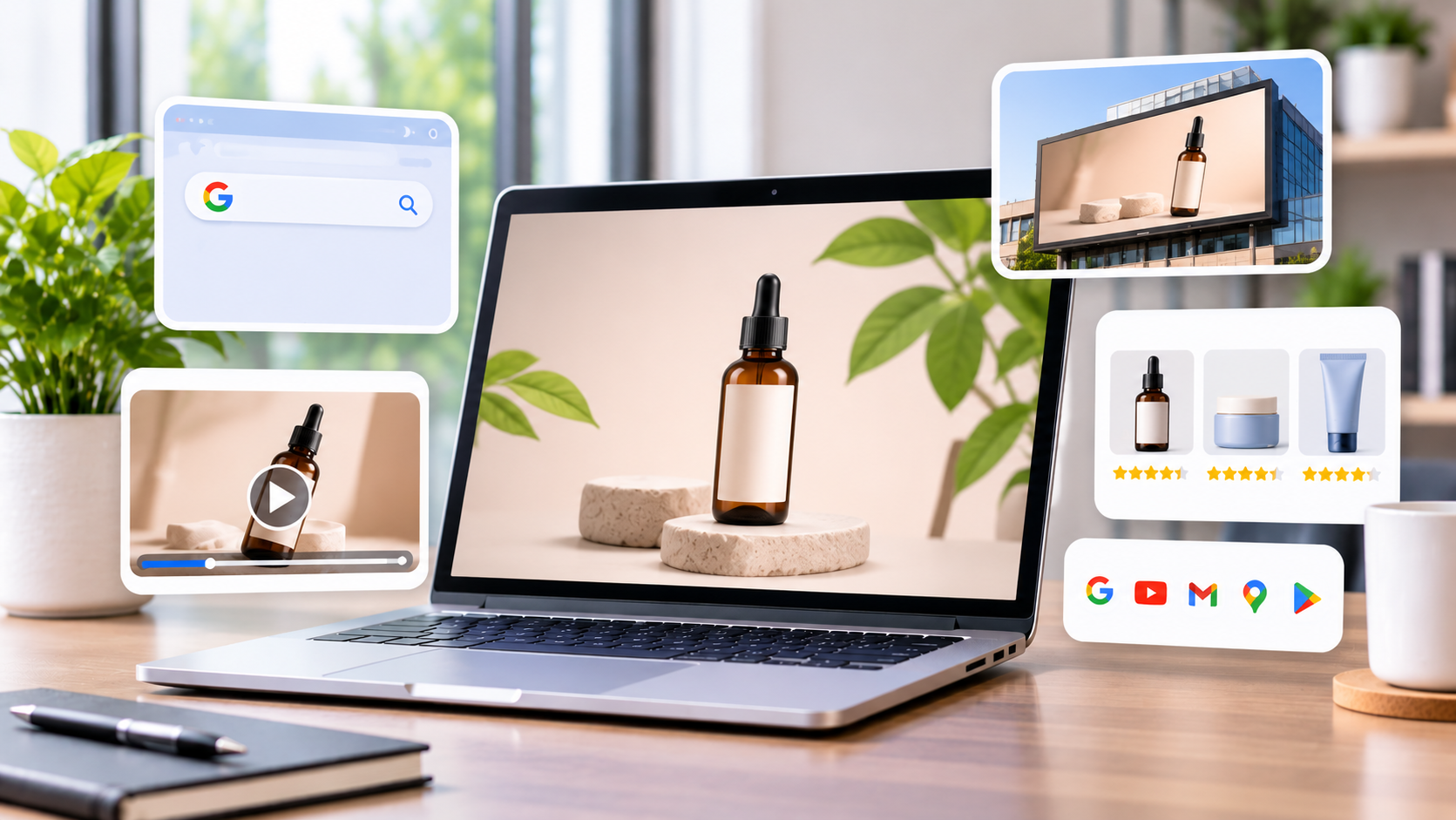
AI-Generated Product Image Ads
AI image tools can create lifestyle backgrounds, promotional layouts, and visual variations using existing product photos. These advertisements can help shoppers imagine how a product might look in different settings.
For example, a furniture brand could present the same chair in several room styles. The business should still verify that generated images accurately represent the product's actual appearance and features.
AI Video Ads for E-Commerce Products
Video advertisements help demonstrate product features and show how items work in everyday situations. AI tools can assist with video concepts, animations, captions, and editing, making short-form content easier to produce.
A kitchenware brand could use AI-assisted editing to turn existing product footage into several promotional videos for different audiences.
AI UGC-Style Advertising
User-generated content, or UGC-style advertising, uses a casual presentation that resembles the product demonstrations and recommendations commonly seen on social media. AI can help generate scripts, edit footage, and develop different storytelling approaches.
However, brands should avoid presenting fictional AI-generated testimonials as genuine customer experiences. Authenticity and accurate product representation remain important.
AI-Powered Ad Copywriting
AI copywriting tools can generate product descriptions, promotional headlines, captions, and calls to action. Businesses can use these drafts to explore different selling points without writing every variation manually.
For example, an athletic apparel brand could test messaging about comfort, durability, or flexibility. Each claim should be reviewed to ensure it accurately reflects the product.
AI-Powered Dynamic Product Advertising
Dynamic product advertising uses product catalogs and available audience or contextual signals to display relevant items. Advertising platforms can automatically select products and creative combinations based on campaign settings.
This approach is particularly useful for e-commerce stores with large inventories, changing promotions, or products that appeal to different customer groups.
How to Use AI Advertising for Product-Based Businesses: Step-by-Step
Getting started with AI advertising doesn't require replacing your entire marketing process. A structured approach helps you choose useful tools, create relevant content, and measure actual results.
Step 1: Define Your Advertising Goals
Start by identifying what you want your advertisements to accomplish. You might want to introduce a new product, increase website traffic, generate purchases, or encourage repeat orders.
Your goals will determine which advertising formats, platforms, and performance metrics deserve attention. For sales campaigns, useful measurements include cost per purchase, conversion rate, and return on ad spend.
Step 2: Identify Your Target Audience
Consider who buys your products, what influences their decisions, and which problems your products help solve. Existing customer data, website analytics, and previous campaign results can provide useful insights.
Use these findings to create advertising messages that address customer interests while respecting privacy requirements and platform targeting restrictions.
Step 3: Prepare Your Product Information and Creative Assets
Gather accurate product descriptions, specifications, prices, photographs, and brand guidelines before generating advertisements. The quality of these inputs affects how useful and accurate the AI-generated results will be.
Clear product information also reduces the likelihood of misleading visuals, incorrect features, or promotional claims that your business cannot support.
Step 4: Choose the Right AI Advertising Tools
Different AI advertising tools support different tasks. Some specialize in generating product images or videos, while others help with copywriting, creative variations, or campaign optimization.
Compare features based on your workflow, budget, and advertising platforms. Check whether the software supports your preferred formats and offers enough editing control.
Step 5: Generate AI Product Ads
Use your selected tools to create several advertisements that highlight different product benefits. Experiment with visual styles, headlines, and calls to action while keeping your brand identity consistent.
For example, a reusable water bottle brand could create separate advertisements emphasizing portability, ease of cleaning, and everyday convenience.
Step 6: Launch and Test AI Advertising Campaigns
Launch your advertisements with a manageable testing budget and clearly defined objectives. Compare variations under reasonably consistent conditions so you can identify which creative elements may be influencing performance.
Avoid changing every part of a campaign simultaneously, as this makes it harder to understand the results.
Step 7: Monitor and Optimize Advertising Performance
Track important metrics such as click-through rate, conversion rate, cost per acquisition, and return on ad spend. Review these results alongside actual sales and customer behavior.
Use the findings to improve your AI product ads, adjust campaign budgets, and refine your advertising strategy over time.
Best AI Advertising Strategies for Product-Based Businesses
AI works particularly well when businesses use it to support consistent creative testing and campaign improvements. Rather than generating advertisements simply because the technology allows it, focus on producing content that serves a specific marketing purpose.
Use AI to Create Multiple Product Ad Variations
Create different versions of your advertisements to test which product benefits and messages attract attention. A skincare brand, for example, could compare an advertisement emphasizing hydration with another focusing on texture and application.
Testing helps identify useful creative approaches before committing a larger advertising budget.
Combine AI Product Images With Short-Form Video Ads
Product images can communicate features quickly, while short videos provide opportunities to demonstrate how an item works. Combining both formats allows businesses to reach shoppers who prefer different types of content.
A home organization brand might use an image to highlight product dimensions and a video to demonstrate storage capacity.
Personalize Ads for Different Stages of the Customer Journey
Customers who have never heard of your brand may need introductory information, while shoppers comparing products may want more specific details.
AI advertising for e-commerce can help generate messaging for these different stages, including product introductions, feature comparisons, and promotional reminders.
Automate Creative Production for Large Product Catalogs
Businesses selling hundreds of products can use AI to generate consistent advertising copy and creative variations across categories. This reduces repetitive production work and helps maintain a more organized advertising process.
Human review remains important, particularly when product specifications, pricing, and availability change.
Refresh Advertising Creatives to Reduce Ad Fatigue
Customers may become less responsive when they repeatedly see the same advertisements. AI makes it easier to produce fresh variations using different visuals, messaging, or product benefits.
Monitor performance trends before replacing existing ads, since a decline in results may also reflect targeting, competition, or seasonal changes.
Combine AI Automation With Human Creative Direction
AI can generate advertising content quickly, but it doesn't replace your understanding of your products and customers. Your marketing team still needs to determine which messages accurately represent the brand and support business goals.
Combining automation with human judgment helps maintain quality while reducing manual production work.
AI Advertising for Product-Based Businesses Across Different Platforms
Each advertising platform offers different formats and automation capabilities. Understanding these differences helps businesses create campaigns suited to where their customers spend time.
AI Advertising for Facebook and Instagram
Facebook and Instagram support image, video, and product catalog advertising. Meta's advertising systems use machine learning to optimize delivery and provide certain automated creative capabilities.
Businesses can use AI-generated creative variations to test different product benefits and promotional messages across eligible placements.
AI Advertising for TikTok
TikTok advertising typically emphasizes short, engaging videos that fit naturally into the platform's content experience. AI can assist with scripting, editing, captions, and producing alternative video concepts.
Brands should prioritize accurate demonstrations and follow platform requirements for AI-generated or synthetic content.
AI Advertising for Google Ads
Google Ads offers automated bidding and campaign features that help businesses promote products across eligible Google advertising channels. Product feeds, accurate conversion tracking, and relevant creative assets are important for e-commerce campaigns.
AI-generated headlines, descriptions, and images can support campaign production, provided they comply with Google's advertising policies.
AI Advertising for Shopify and Other E-Commerce Stores
E-commerce platforms such as Shopify can provide product information and store performance data for compatible advertising tools. Depending on the available integrations, businesses may be able to synchronize catalogs and simplify parts of their campaign workflows.
Keeping product information accurate helps ensure advertisements reflect current inventory, pricing, and product details.
How to Choose the Best AI Advertising Tools for Product-Based Businesses
With so many AI advertising tools available, choosing one should start with your actual marketing needs. A tool that generates impressive visuals may not be useful if it doesn't support your product catalog or advertising workflow.
Essential Features to Look for in AI Advertising Software
Look for features that match your priorities, such as AI product image generation, video editing, ad copywriting, creative variations, and brand customization. Platform integrations and product catalog support may also be valuable for businesses managing multiple campaigns.
Editing controls are especially important because generated advertisements often need adjustments before publication.
Factors to Consider When Comparing AI Advertising Tools
Compare subscription costs, usage limits, output quality, commercial usage rights, and available support. Consider how much time the software saves compared with your existing process.
Testing several tools with the same product assets can help you determine which produces the most useful results.
AI Ad Generators vs. Traditional Ad Creation Software
An AI ad generator for products can produce draft advertisements quickly using prompts and existing assets. Traditional creative software generally provides more direct control over detailed editing and visual production.
Many businesses benefit from using both, with AI handling initial variations and traditional editing tools supporting final refinements.
The Future of AI Advertising for Product-Based Businesses
AI advertising continues to develop as businesses look for more efficient ways to create campaigns and reach customers. Several trends are likely to influence how product-based brands approach digital advertising.
Greater Automation in Product Ad Creation
AI tools are expected to handle more repetitive production tasks, including adapting product images to different formats and generating advertisements from existing catalogs. This could help businesses manage larger campaigns without proportionally increasing production workloads.
More Personalized Product Advertising
Advertising platforms may continue improving how they match products and creative messages with relevant audiences. Businesses will need to balance personalization with privacy requirements and responsible data practices.
Expansion of AI Video and UGC-Style Advertising
As AI video capabilities improve, brands may gain more options for producing demonstrations, promotional clips, and UGC-style content. Accurate product representation and transparency will remain important for maintaining customer trust.
The Growing Importance of Creative Testing
Faster content production means businesses can experiment with more advertising ideas. However, producing additional ads only creates value when brands can identify which ones generate meaningful results.
Consistent testing, accurate conversion tracking, and thoughtful optimization will remain central to successful AI-powered advertising.
AI advertising for product-based businesses gives e-commerce brands practical ways to reduce production time and improve their marketing workflows. The goal is to create advertisements that communicate product value clearly, reach relevant audiences, and contribute to measurable business results.
Leapify is an option to explore if you're looking for ways to simplify your advertising process and incorporate AI into your marketing strategy. With the right combination of tools and creative direction, your business can spend less time on repetitive tasks and more time improving campaign performance.
Ready to see what AI can do for your product advertising? Sign up for Leapify and start creating smarter, more effective campaigns with less manual work.
Frequently Asked Questions
What Is AI Advertising for Product-Based Businesses?
AI advertising for product-based businesses uses artificial intelligence to help create product advertisements, generate marketing copy and visuals, and optimize advertising campaigns. It allows e-commerce brands to produce creative variations and use performance data to guide marketing decisions.
How Can AI Advertising Help E-Commerce Businesses Increase Sales?
AI advertising can help e-commerce businesses increase sales by supporting faster creative production, more relevant product messaging, and ongoing campaign testing. Actual results depend on product demand, targeting, advertising budgets, website performance, and conversion optimization.
What Are the Main Benefits of AI-Powered Advertising?
The main benefits of AI-powered advertising include faster ad creation, reduced repetitive work, easier creative testing, and more efficient campaign management. Businesses can also use AI to adapt promotional content across multiple platforms and product categories.
Can AI Create Product Advertisements Automatically?
Yes. AI advertising tools can generate product images, promotional videos, headlines, and ad variations using product information or prompts. Businesses should review the content before publishing to verify accuracy, brand consistency, and compliance with advertising policies.
What Is the Best AI Ad Generator for Product-Based Businesses?
The best AI ad generator for products depends on your budget, creative needs, product catalog, and preferred advertising platforms. Compare tools based on output quality, customization, integrations, pricing, and commercial usage rights. Testing them with your actual product information is a practical way to evaluate their suitability.