AI image generation helps beauty and skincare brands create product visuals, social media content, and advertising creatives without arranging a new photoshoot for every campaign. You can place a serum bottle in different settings, refresh product backgrounds, or develop visuals for an upcoming launch using existing assets.
But how do you create AI-generated images for marketing without misrepresenting your products? Here's how AI product photography works, where it makes sense, and how to use it effectively in beauty marketing.
What Is AI Image Generation and How Does It Work?
AI image generation uses artificial intelligence to create or edit visuals from written instructions, reference photos, or existing images. Beauty brands can use it to produce product scenes, promotional graphics, and campaign concepts without building every setup physically.
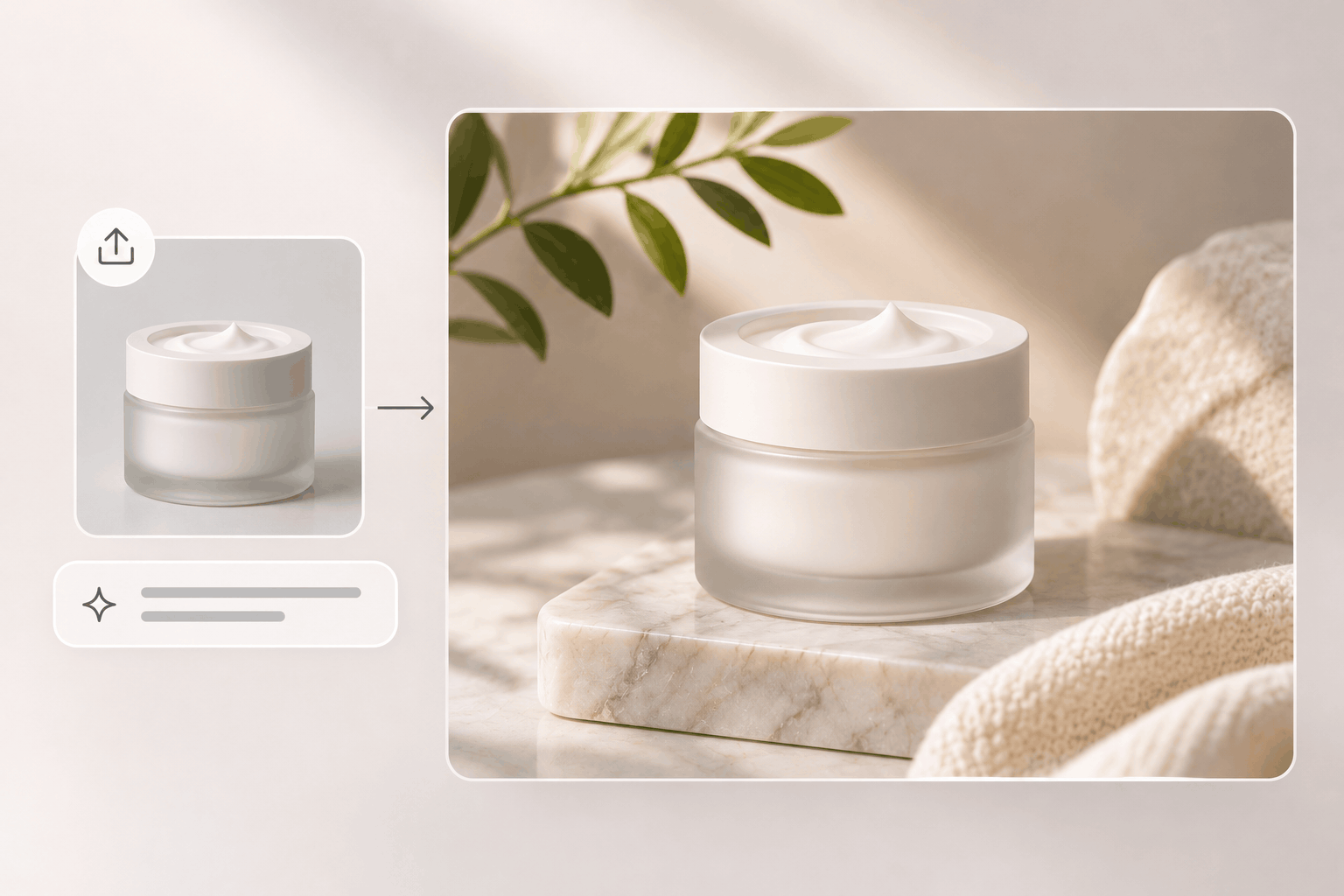
For example, you could upload a moisturizer photo and generate a clean studio setting with soft lighting and a marble background. The software creates the surrounding scene while using your original image as a reference.
How AI Image Generators Create Beauty and Skincare Visuals
AI image generators interpret prompts and visual references to produce new images. You describe the product, lighting, background, and overall style, and the software generates a visual based on those details.
Some tools also support background replacement, image editing, and creative variations. The output may still need adjustments, especially when the product has detailed packaging or labels.
AI-Generated Images vs. Traditional Product Photography
Traditional photography captures the actual product using physical lighting, props, and camera equipment. It offers greater control over packaging details, colors, and textures.
AI can create additional scenes and campaign variations without another shoot, but it may introduce inaccuracies. Both methods have advantages, depending on whether you need exact product representation or creative flexibility.
Types of AI-Generated Images Used in Beauty Marketing
AI can support several types of beauty marketing visuals:
- Product hero images: Clean compositions that highlight a featured item.
- Lifestyle scenes: Skincare and cosmetics placed in bathrooms, vanities, or everyday settings.
- Social media graphics: Creative visuals for organic posts and promotions.
- Seasonal advertisements: Product images with holiday themes or seasonal styling.
- Campaign concepts: Mood boards and visual directions for upcoming collections.
Choose the format based on where the image will appear and what customers need to understand.
Read more: AI Image Generation vs Traditional Design
Why AI Image Generation Is Transforming Beauty and Skincare Marketing
Beauty brands need fresh visuals for product launches, social media, ecommerce, and advertising. Producing everything traditionally can be expensive, especially when campaigns require several creative versions.
AI beauty marketing offers a faster way to explore ideas and prepare additional content.
Reducing Product Photography and Content Production Costs
Professional shoots can involve photographers, stylists, studio rentals, props, and editing. AI can reduce some of these expenses when you already have accurate product photos and only need new backgrounds or compositions.
You'll still need to account for software costs and quality control, but not every campaign requires a completely new shoot.
Creating Marketing Visuals Faster
AI can generate initial concepts and variations without waiting for another production schedule. This is useful for limited-time promotions, seasonal campaigns, and last-minute creative updates.
Instead of rebuilding a scene physically, you can test different visual directions digitally and refine the strongest option.
Maintaining Consistent Brand Aesthetics
Brand guidelines help keep generated images recognizable. Use consistent colors, lighting, compositions, and styling across your content.
For example, a minimalist skincare brand could maintain its neutral palette and clean backgrounds throughout several product collections.
Scaling Visual Content Across Multiple Marketing Channels
A single product may need images for your website, email campaigns, social media, and paid advertisements. AI can help adapt the same concept into different layouts without starting each creative from zero.
Experimenting With Creative Concepts and Campaign Designs
AI makes it easier to explore different ideas before choosing a final direction. You could compare a clean clinical aesthetic with a warmer lifestyle setting or test several product arrangements for an advertisement.
This gives your team more creative options without committing to every concept through traditional production.
How Beauty and Skincare Brands Can Use AI Image Generation
AI works particularly well when you want to expand your existing visual library. Here are some practical applications for skincare and cosmetics marketing.
AI Product Photography for Skincare and Cosmetic Products
AI product photography can help create studio-style backgrounds and polished compositions for serums, moisturizers, cleansers, and makeup products.
A skincare brand could photograph its actual serum bottle and generate a reflective surface with soft lighting around it. This creates a new promotional look while retaining the original product as a reference.
AI-Generated Images for Social Media Marketing
Social media content benefits from variety. AI can help create different settings for the same product, such as a minimalist flat lay, a summer-themed composition, or a styled vanity scene.
These variations give your feed a fresh look without requiring new photography for every post.
AI Image Generation for Beauty Advertising Campaigns
Paid advertising often involves comparing different visuals to find what attracts customers. AI lets you prepare alternative backgrounds, compositions, and creative concepts for testing.
For example, you could compare a serum against a plain background with another version featuring ingredients associated with its formula.
AI-Generated Skincare Product Images for eCommerce Websites
Ecommerce shoppers need clear images of what they're buying. AI can assist with background cleanup and additional lifestyle visuals, while original product photos should accurately show packaging, colors, and other important details.
AI Beauty Marketing Visuals for Product Launches
New product launches often require teaser images, announcement graphics, and promotional assets. AI can help create a coordinated visual campaign using your existing product references and brand guidelines.
AI-Generated Backgrounds and Lifestyle Scenes
Sometimes, the product photo is already good but needs a different setting. AI can place a moisturizer on a bathroom counter or a sunscreen bottle beside a beach bag.
These scenes help customers connect products with familiar situations without building a physical set.
Key Benefits of AI Image Generation for Beauty and Skincare Brands
Beyond producing images, AI can make creative workflows easier to manage, especially for brands running several campaigns at once.
Lower Visual Content Production Expenses
Reusing product photography can reduce spending on additional sets, props, and studio time. The savings depend on how much editing and manual correction the generated images require.
Faster Campaign Development and Product Launches
AI allows teams to create and revise promotional assets without arranging another shoot. This can help shorten preparation time when launching products or updating campaigns.
Greater Creative Flexibility and Customization
You can experiment with different backgrounds, lighting styles, and compositions before selecting the final creative. It's especially useful when a campaign needs several visual directions.
Consistent Branding Across Digital Platforms
Reusable prompts and brand guidelines can help maintain a recognizable aesthetic across your website, advertisements, and social media content.
Easier Content Personalization for Different Audiences
Different customers may respond to different visual styles. AI can help adapt product presentations for specific audience segments while keeping the product itself consistent.
More Opportunities for A/B Testing Marketing Visuals
AI makes it practical to test several image concepts rather than relying on one. Compare performance to understand which creative approach encourages engagement and conversions.
Read more: AI Advertising for Ecommerce: Best Practices
How to Create AI-Generated Images for Beauty and Skincare Marketing
Good results depend on clear creative direction and accurate product references. Here's a straightforward process for developing usable marketing visuals.
Step 1: Define Your Brand's Visual Identity and Marketing Goals
Decide what the image needs to accomplish. A product listing may require a clean, accurate presentation, while a social media advertisement could benefit from a more creative setting.
Step 2: Choose the Right AI Image Generator for Your Brand
Look for software that supports reference images, background editing, and control over lighting and composition. Check its commercial licensing terms and how well it preserves product details.
Step 3: Write Detailed AI Image Prompts for Beauty Products
Describe the setting, lighting, camera angle, and visual style. Be specific about which product features must remain unchanged.
For example:
"Create a realistic skincare advertisement featuring the reference vitamin C serum bottle on a cream marble surface. Use soft morning sunlight and a minimalist background. Preserve the bottle's exact shape, label, logo, cap, and original colors."
Step 4: Generate and Refine Your AI Product Images
Create several variations and compare how effectively each one presents the product. Adjust backgrounds, lighting, or composition as needed, keeping the focus on the item you're advertising.
Step 5: Review Images for Accuracy and Brand Consistency
Check packaging, label text, colors, and proportions against the original product. Review any people or skin shown in the image to make sure the visuals don't imply unrealistic results.
Step 6: Optimize AI-Generated Images for Digital Marketing
Export images in the appropriate dimensions for each platform. Keep the product clearly visible, leave room for advertising text when needed, and compress files for faster loading.
Best Practices for Using AI Image Generation in Beauty Marketing
Beauty advertising needs to be visually appealing without creating false expectations. These practices help maintain that balance.
Keep AI-Generated Images Consistent With Your Brand Identity
Use established colors, lighting, and photography styles. Reusable prompts can help your team maintain a recognizable look across different campaigns.
Use High-Quality Product References for Accurate Visuals
Start with clear photos of the actual product, preferably from multiple angles. Good references make it easier to maintain accurate packaging and spot unwanted changes.
Create Realistic Skin Textures and Diverse Beauty Representations
Skin naturally has pores, texture, fine lines, and variations in tone. Avoid unnaturally flawless AI-generated faces and include diverse, realistic representations when using people in your visuals.
Avoid Misleading Skincare Results and Product Claims
Don't fabricate before-and-after images or imply that a product delivers results it hasn't been shown to achieve. Claims about acne, pigmentation, wrinkles, or other skincare outcomes should have appropriate support.
Combine AI-Generated Images With Authentic Product Photography
Use original photographs to document the product accurately, then create additional settings or compositions with AI. This gives you creative flexibility without relying entirely on generated product representations.
Review Commercial Usage Rights and Intellectual Property Considerations
Check the AI platform's licensing terms and make sure you have rights to the materials used. Follow relevant advertising policies, particularly when generated people or altered demonstrations appear in campaigns.
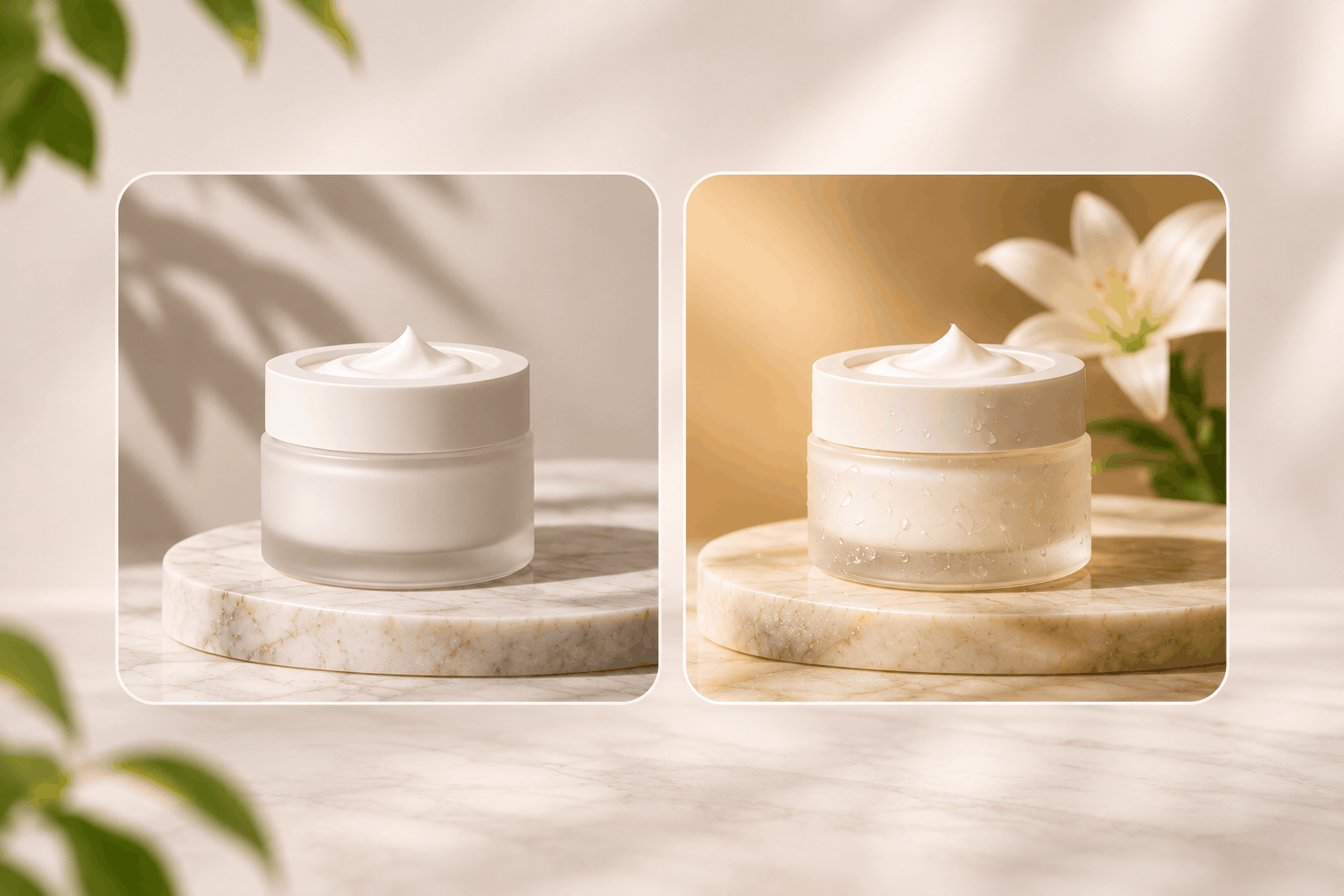
Test AI-Generated Visuals Against Traditional Marketing Images
Compare AI-generated advertisements with your existing photography. Track engagement, clicks, and conversions to see which approach performs better for your audience.
Read more: How Small Businesses Can Use AI Advertising
Common Challenges of AI Image Generation for Skincare Brands
AI can produce polished visuals, but it can also introduce errors that matter in beauty advertising. Review the following issues before publishing.
Inaccurate Product Packaging and Label Details
AI may distort logos, invent label text, or alter bottle shapes. Compare every generated product image with the actual packaging and correct inaccuracies.
Unrealistic Skin Textures and Beauty Standards
Generated faces may look overly smooth or show exaggerated cosmetic results. Use realistic skin references and avoid presenting artificial transformations as proof of product effectiveness.
Maintaining Visual Consistency Across Campaigns
Packaging colors and product details can change between generated images. Use consistent references and review outputs individually, particularly when producing several versions of the same product.
Copyright, Licensing, and Commercial Usage Concerns
Commercial rights vary between AI tools, and generated content may raise intellectual property questions. Review licensing conditions and avoid using protected creative elements without permission.
Consumer Trust and Transparency in AI Beauty Advertising
Customers should be able to trust the visuals they see. Don't use AI to misrepresent a product's appearance or results, and follow applicable disclosure requirements when generated or altered content could affect consumer understanding.
AI Image Generation vs. Traditional Product Photography: Which Is Better for Beauty Brands?
Both methods have their place. The choice depends on how much product accuracy, creative flexibility, and production control your campaign requires.
When to Use AI-Generated Images
AI works well for lifestyle backgrounds, seasonal campaigns, concept development, and advertising variations. It's useful when you already have accurate product images but need additional creative assets.
When Traditional Product Photography Is More Appropriate
Real photography is preferable for showing exact makeup shades, product textures, packaging details, and genuine application results. These are details customers rely on when deciding what to buy.
Why a Hybrid Visual Content Strategy Can Work Best
A hybrid approach combines reliable product photography with AI-generated creative settings. Brands can maintain accurate product representations while producing additional campaign visuals more efficiently.
Read more: AI Image Generation vs Traditional Design
How to Measure the Success of AI-Generated Images in Beauty Marketing
The value of an advertising image depends on how well it supports your goals. Track performance rather than assuming the most polished visual will generate the strongest results.
Track Engagement Rates on Social Media
Review likes, shares, saves, and comments to understand which visuals attract attention. Compare similar posts under reasonably consistent conditions.
Measure Click-Through Rates for AI-Generated Advertisements
Click-through rate shows how often impressions lead to clicks. Test different image concepts while keeping other major campaign elements consistent.
Monitor eCommerce Conversion Rates
Track whether visitors who see your product visuals go on to purchase or complete another desired action. Strong engagement doesn't always translate into sales.
Compare Visual Content Production Costs
Include software expenses, editing time, and quality control when comparing AI-generated content with traditional photography. Lower costs are valuable when the images remain accurate and usable.
Evaluate Customer Feedback and Brand Perception
Pay attention to comments and customer questions about your visuals. If shoppers say a product looks different from its advertisement, review the creative before continuing the campaign.
The Future of AI Image Generation in the Beauty and Skincare Industry
AI image generation is becoming a practical part of beauty marketing, particularly for brands that need frequent creative updates. As tools improve, businesses may gain more control over product consistency, realistic skin representation, and campaign customization.
AI could also become more closely integrated with ecommerce catalogs and advertising platforms, making it easier to create promotional content using existing product assets. However, human review will remain essential because customers rely on images to understand what they're buying.
Leapify helps businesses explore AI-powered advertising and more efficient creative workflows. For beauty and skincare brands, AI can support faster content production, more creative experimentation, and better use of existing marketing assets.
Ready to create more beauty marketing visuals without starting every campaign from scratch? Sign up for Leapify and explore how AI can support your next product launch or advertising campaign.
Frequently Asked Questions
What Is AI Image Generation in Beauty Marketing?
AI image generation in beauty marketing uses artificial intelligence to create or edit promotional visuals for skincare, cosmetics, and beauty products. Brands can generate product backgrounds, lifestyle scenes, social media graphics, and advertising concepts using text prompts or reference images.
How Can Skincare Brands Use AI-Generated Images?
Skincare brands can use AI-generated images for social media campaigns, ecommerce lifestyle visuals, product launches, seasonal promotions, and paid advertising. AI can create additional backgrounds and compositions using existing product photography, provided the images accurately represent the products.
Can AI Image Generation Replace Traditional Product Photography?
AI can replace some creative production tasks, such as generating backgrounds and advertising variations, but traditional photography remains important for showing actual packaging, makeup shades, textures, and genuine product results. Combining both methods is often the most practical approach.
What Is the Best AI Image Generator for Beauty and Skincare Brands?
The best AI image generator depends on your budget and creative requirements. Look for tools that support reference images, detailed editing, realistic lighting, consistent product appearance, and commercial usage. Packaging accuracy is particularly important for skincare and cosmetics advertising.
Are AI-Generated Images Suitable for Skincare Advertisements?
Yes. AI-generated images can be used in skincare advertisements when they accurately represent the product, comply with advertising policies, and avoid misleading claims. Brands should review packaging details, skin representations, and any implied product results before publishing.