
Creating marketing visuals used to mean handing a brief to a designer and waiting for concepts, revisions, and final files. AI image generation gives teams another option by turning prompts and creative inputs into visuals in seconds or minutes. But faster does not always mean better, and traditional graphic design still offers a level of control that AI may struggle to match. This guide breaks down AI vs traditional design and where each approach makes the most sense.
What Is AI Image Generation?
AI image generation uses artificial intelligence to create new visuals based on prompts, reference materials, or other inputs. Instead of manually building every element, a user describes what they want and the AI creates an image based on those instructions.
An AI image generator can be useful for everything from quick concepts to social media graphics, advertising creative, product scenes, and lifestyle visuals. The exact capabilities depend on the tool being used.
How Does AI Image Generation Work?
The process usually starts with a prompt. A user might describe the subject, setting, composition, mood, lighting, or other details they want to see.
The AI then generates one or more options based on that input. Users can refine the prompt, generate another version, or edit parts of the image until they get closer to what they need.
What Is Traditional Graphic Design?
Traditional graphic design relies on human designers using tools such as illustration, photography, typography, layout, and image-editing software to create visual content.
The process usually starts with a creative brief, followed by concepts, design work, feedback, revisions, and final delivery. Designers make deliberate decisions about hierarchy, composition, branding, typography, and how the visual communicates a specific message.
That human control is one of its biggest strengths. The designer is not simply creating something attractive but making creative decisions around a specific business goal.
AI Image Generation vs Traditional Design: Key Differences
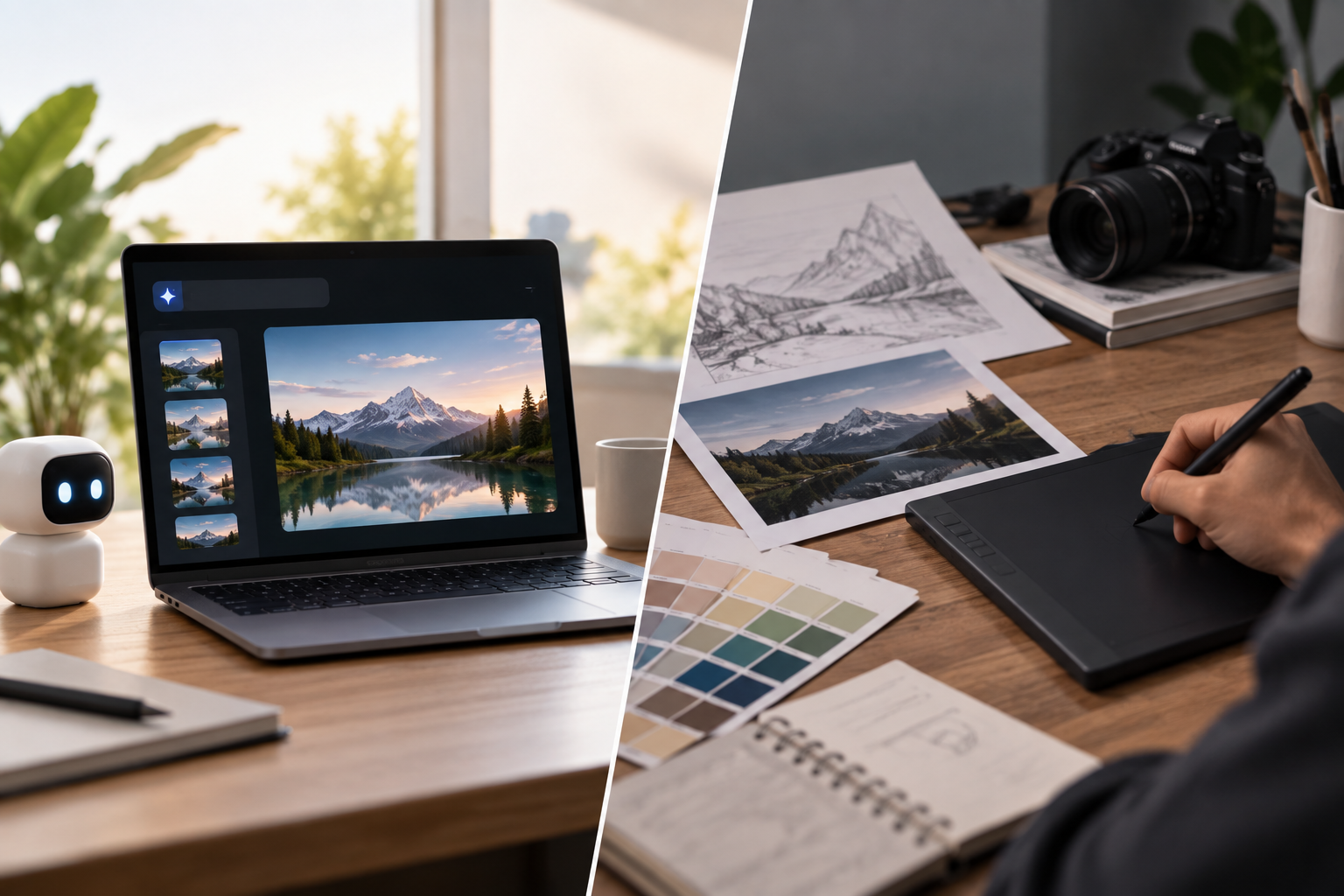
Both approaches can produce strong creative, but they get there differently. The biggest differences come down to speed, cost, control, scalability, and how much human input the project needs.
1. Speed and Production Time
Speed is one of the clearest advantages of AI image generation. Teams can generate several concepts in the time it might take to manually create one first draft.
Traditional design generally takes longer because someone has to build the visual and make each change manually. That extra time can be worth it when the project needs careful art direction or detailed customization.
2. Cost of Creating Visual Content
An AI image generator can lower the amount of manual production required for certain projects. This is especially useful when a marketing team needs a high volume of simple creative.
Traditional design usually requires more hands-on time, which can increase production costs. However, paying for human expertise can make sense when a project has a higher creative or commercial value.
3. Creative Control and Customization
Traditional design gives teams direct control over individual elements. Designers can adjust exact spacing, typography, colors, proportions, layouts, and other details.
AI can follow detailed instructions, but it may take several attempts to get a specific result. Even then, small details may not come out exactly as intended.
4. Creativity and Originality
AI can generate plenty of interesting ideas quickly, which makes it useful for brainstorming and exploring different visual directions.
Human designers bring something different. They can interpret culture, strategy, humor, emotion, brand context, and subtle creative direction in ways that require more than generating an attractive image.
5. Scalability and Creative Variations
AI has a major advantage when volume matters. A team can use AI graphic design tools to explore multiple backgrounds, compositions, visual concepts, and ad variations quickly.
Creating the same number of versions manually takes much longer. For brands running frequent creative tests, that difference can add up fast.
6. Brand Consistency
Human designers can work directly from detailed brand guidelines and make judgment calls when something does not quite feel right.
AI tools can also use brand inputs, references, and style direction, but results still need review. Without proper oversight, AI-generated images can start looking inconsistent across campaigns.
7. Revisions and Iterations
AI makes broad experimentation quick. Teams can request a different composition, background, subject, or visual direction without having to rebuild the entire image manually.
Traditional design can make precise revisions easier. If a client wants one exact element moved, resized, or changed, a designer has direct control over that adjustment.
8. Quality and Accuracy
Both methods can produce high-quality work, but neither is automatically better.
AI may create visual errors, inconsistent details, unrealistic product features, or inaccurate text. Traditional designers can also make mistakes, but they have greater control over individual details and can verify them throughout the process.
Benefits of AI Image Generation for Marketing and Advertising
Marketing teams constantly need new creative. AI image generation can make that workload easier, especially when speed and volume matter.
Faster Creative Production
AI can shorten the gap between an idea and the first visual concept. Instead of waiting for every concept to be manually created, teams can quickly explore several directions.
This can be especially helpful for fast-moving campaigns, seasonal promotions, and social content.
More Creative Variations for Ad Testing
Paid advertising rarely works well with one piece of creative forever. Teams need different visuals to test and refresh campaigns.
AI can generate multiple creative directions without requiring each version to be built from scratch. That gives marketers more options to compare.
Scalable Content Creation
Brands producing content across several products, audiences, and platforms can quickly run into a production bottleneck.
AI graphic design can help create more content without increasing manual production at the same rate. Human review can then focus on selecting and refining the strongest options.
Rapid Creative Experimentation
Not every idea deserves hours of design work. Sometimes a team simply wants to know if a concept is worth pursuing.
AI makes those early experiments cheaper and faster. If the idea works, a designer can refine it later.
Limitations of AI Image Generation
AI-generated images still need human review. A visual can look impressive at first glance while containing small errors that make it unusable for a real campaign.
Common limitations include:
- Inaccurate product details
- Strange anatomy or objects
- Inconsistent branding
- Weak typography
- Difficulty making exact revisions
- Generic-looking creative
- Limited understanding of brand context
- Potential intellectual property or usage concerns
- Incorrect logos, labels, or text
Brands also need to understand the terms and commercial-use rules of the AI tools they choose. AI should speed up creative work, not remove the quality-control process.
Advantages of Traditional Graphic Design
Traditional graphic design gives businesses greater control over how a visual looks and communicates. Designers can work from specific brand standards while considering the audience, campaign goal, messaging, and wider creative strategy.
It is particularly valuable for projects that need:
- Detailed brand alignment
- Custom typography and layouts
- Precise product representation
- Complex visual communication
- Original illustration
- High-level art direction
- Print-ready assets
- Detailed revisions
A good designer can also explain why a creative choice works. That strategic thinking matters when the project needs more than quick visual output.
Read more: Best Ways to Use an AI Ad Generator for Product Campaigns
Limitations of Traditional Graphic Design
The main trade-off is time. Designers need time to interpret briefs, develop concepts, build assets, receive feedback, and make revisions.
Scaling can also become expensive. If a company suddenly needs 50 ad variations across several campaigns, manually creating every version can put significant pressure on the creative team.
This does not make traditional design inefficient. It simply means manual production is not always the most practical option for every piece of marketing content.
AI Image Generation vs Traditional Design Comparison
Here is how the two approaches compare at a glance:
The better option depends on the job. A social media ad that needs ten variations has very different creative requirements from a new brand identity.
Read more: Can an AI Ad Generator Replace Creative Agencies?
When Should You Use AI Image Generation?
AI image generation works particularly well when a team needs speed, volume, or room to experiment. It can also help smaller teams produce creative without turning every new idea into a full design project.
Social Media Content
Social media moves quickly and needs a steady stream of fresh visuals. AI can help teams generate concepts, backgrounds, supporting graphics, and variations for frequent posting.
Human review should still make sure the final content fits the brand and platform.
Digital Advertising
Advertising requires constant creative testing. An AI image generator can help teams produce different visual directions without manually building every variation.
Marketers can test those concepts and put more design resources behind the ones that show potential.
Product and Lifestyle Concepts
AI can place products into different conceptual settings or help teams visualize campaign ideas before committing to a photoshoot.
Accuracy matters here. Any generated product image should be checked carefully so it does not misrepresent what customers will actually receive.
Creative Brainstorming
AI is useful when a team knows it needs something new but has not settled on a direction.
Generating several visual concepts can help designers and marketers discuss what they like, what they do not, and where the idea should go next.
High-Volume Marketing Campaigns
Campaigns with several audiences, products, formats, and channels need a lot of creative.
AI can help generate the volume while human teams handle strategy, selection, refinement, and quality control.
When Is Traditional Graphic Design the Better Choice?
Traditional design makes more sense when exact control matters. Brand identity projects, packaging, complex layouts, high-value campaigns, detailed illustrations, and print materials often benefit from hands-on human design.
It is also the stronger option when creative work needs deeper strategic thinking. A designer can understand why a visual needs to communicate a certain idea and build around that goal instead of simply responding to a prompt.
Can AI Image Generation and Traditional Design Work Together?
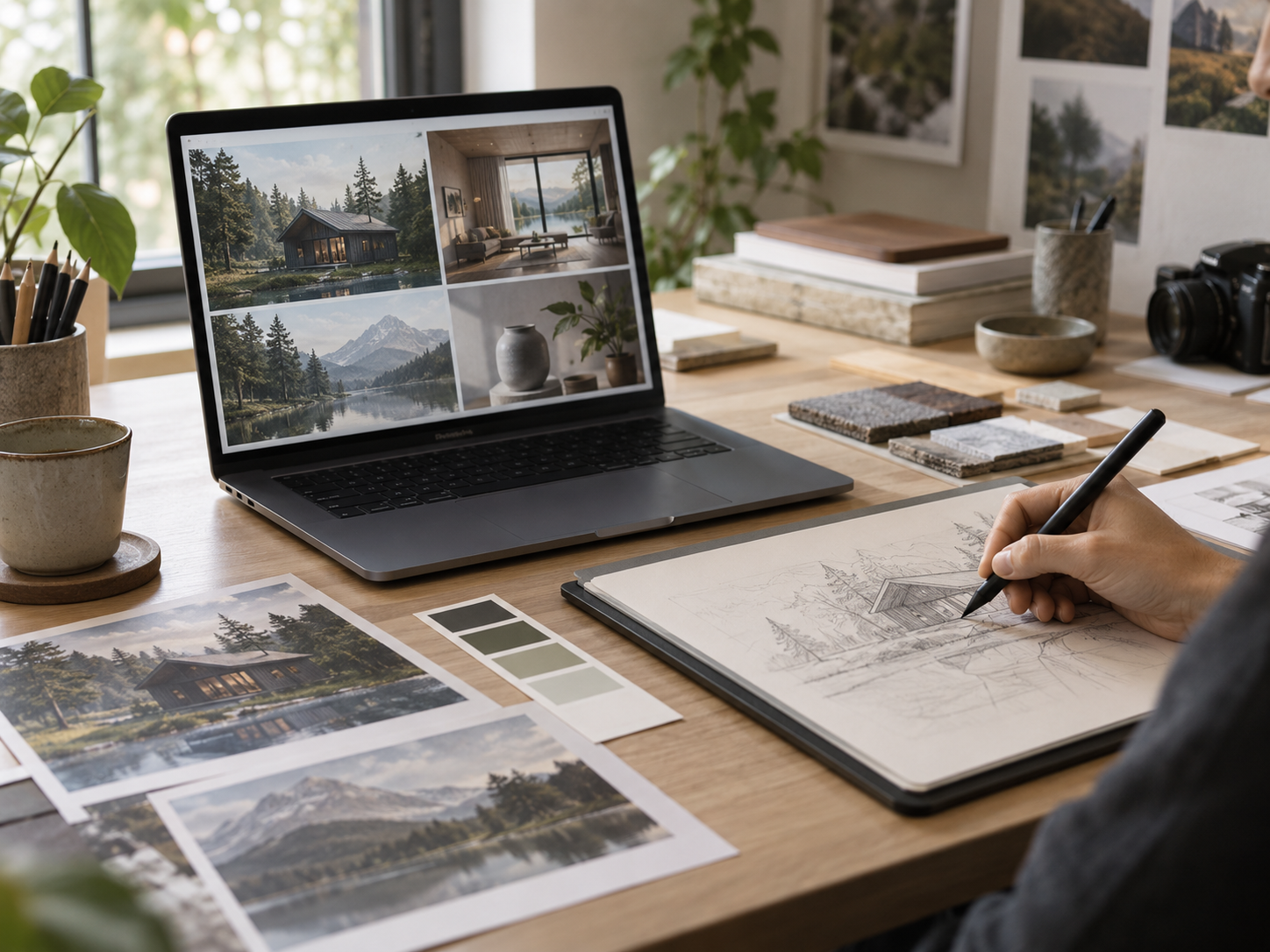
They can, and this is often more practical than treating AI vs traditional design as an either-or decision. AI can handle some of the faster exploratory work while designers bring strategy, judgment, and refinement.
Using AI for Ideation and Concept Development
Teams can use AI to explore different creative directions before committing significant production time.
Designers can then review those concepts, pull out the strongest ideas, and turn them into something more polished.
Using Designers for Refinement and Brand Alignment
AI output can provide a starting point rather than the final asset.
Designers can refine layouts, typography, imagery, product details, and brand elements to make the creative ready for actual use.
Using AI to Scale Designer-Created Concepts
The workflow can also work in reverse. A designer creates the main visual direction, and AI helps generate supporting variations around it.
This gives brands a way to scale creative without asking designers to manually rebuild every small variation.
How AI Image Generation Is Changing the Future of Graphic Design
AI is changing how quickly visual ideas can move from a brief to something a team can actually see. That means less time may be spent creating basic drafts and repetitive variations.
It does not remove the need for designers. Their role can shift toward creative direction, brand thinking, refinement, quality control, and deciding which ideas are actually worth using. AI handles more production work while people stay responsible for the creative decisions behind it.
AI Image Generation vs Traditional Design: Which Should You Choose?
There is no need to choose one method for every project. AI image generation is useful for speed, experimentation, creative testing, and high-volume content, while traditional graphic design gives teams stronger control over detailed, brand-sensitive work.
For many marketing teams, combining the two makes the most sense. Leapify helps brands bring AI-powered creative into their advertising workflow so they can generate, test, and scale visual concepts without adding unnecessary production work. Sign up for Leapify and start creating more ad variations faster.
Frequently Asked Questions
What Is AI Image Generation?
AI image generation uses artificial intelligence to create visuals from prompts, reference images, or other creative inputs. It can be used for advertising, social media, concepts, product imagery, and other marketing content.
Is AI Image Generation Better Than Traditional Graphic Design?
Not always. AI is usually faster and easier to scale, while traditional graphic design gives businesses more precise creative control and human judgment. The better choice depends on the project.
Can AI Image Generation Replace Graphic Designers?
Not completely. AI can automate parts of visual production, but designers are still valuable for creative strategy, brand direction, detailed refinement, quality control, and complex design work.
What Are the Main Benefits of Using an AI Image Generator?
An AI image generator can speed up production, generate more creative options, support rapid experimentation, and make high-volume content easier to produce. It can be especially useful for marketing teams that need frequent creative variations.
What Are the Disadvantages of AI-Generated Images?
AI-generated images can contain inaccurate details, inconsistent branding, weak text, visual errors, or generic-looking creative. They also require human review for quality, accuracy, brand fit, and appropriate commercial use.




.png)