
An AI image generator helps furniture and home decor brands create product visuals without organizing a full photoshoot for every campaign. You can showcase the same sofa in different living rooms, experiment with interior styles, or create seasonal advertisements using existing product photos. AI product photography also makes it easier to test creative ideas without constantly rebuilding your marketing assets. Here's how to use AI-generated images for advertising while keeping your furniture looking accurate, realistic, and appealing to customers.
What Is an AI Image Generator for Furniture and Home Decor?
An AI image generator is a tool that creates or edits visuals using artificial intelligence. For furniture brands, it can produce room scenes, lifestyle images, product backgrounds, and advertising concepts based on written instructions or existing photographs.
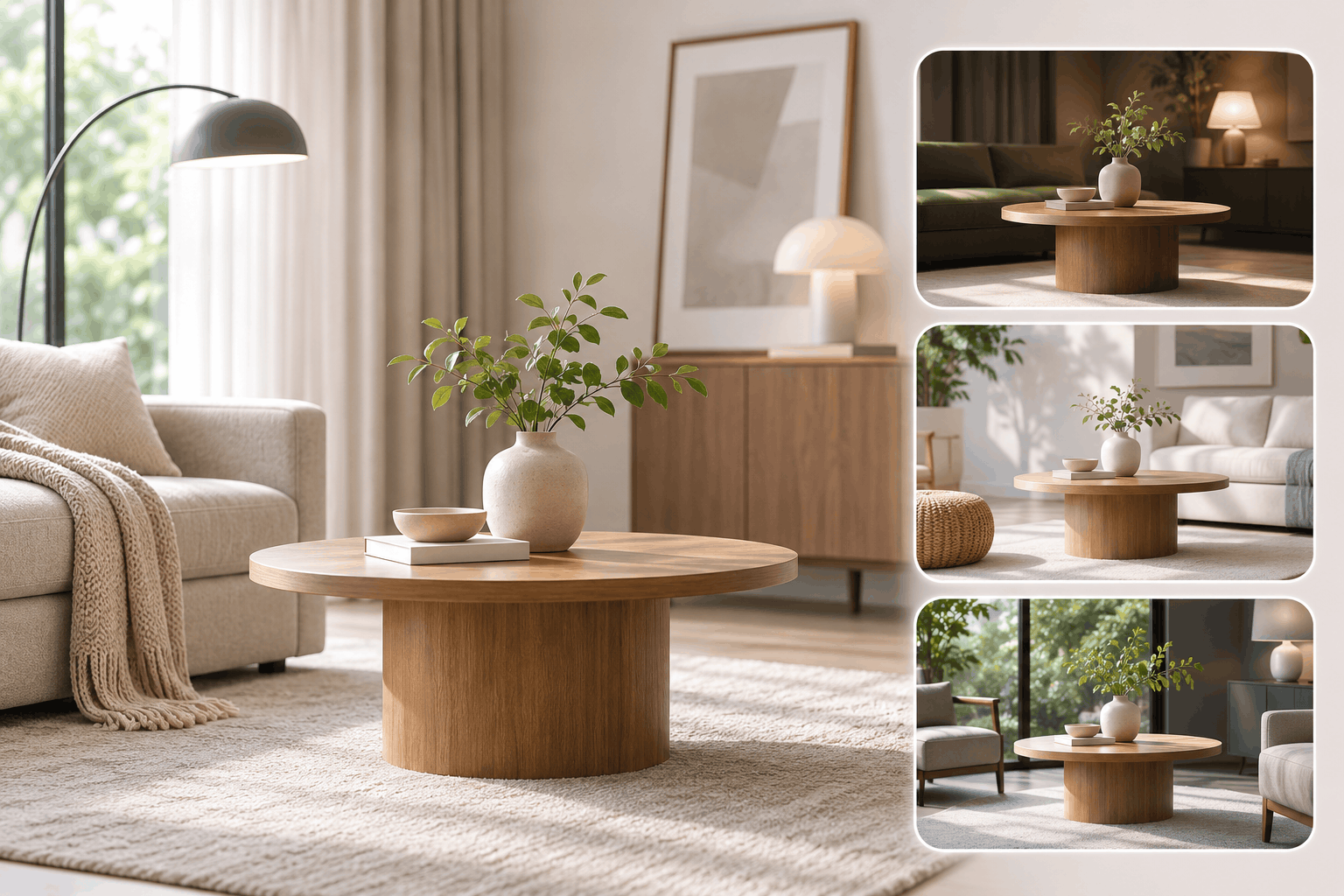
Instead of physically moving a dining table between several styled rooms, you can create different settings digitally. This gives customers a better idea of how a product might look in their homes without requiring a separate photoshoot for every interior style.
How Does an AI Furniture Image Generator Work?
An AI furniture image generator uses text prompts, reference photos, or both to create visuals. You might upload a picture of an armchair and ask the software to place it in a bright Scandinavian living room with wooden floors and neutral decor.
The tool generates a new image based on those instructions. Depending on its capabilities, you can adjust the lighting, background, furniture placement, and decorative elements while keeping the original product as a reference.
The important part is checking the output. AI can occasionally change product details, so the generated furniture should always be compared with the actual item before publication.
Types of Furniture and Home Decor Images AI Can Create
AI can produce several types of visuals for furniture marketing, depending on your campaign needs.
An AI interior design image generator is particularly useful for lifestyle advertising because it lets you show how furniture works with different room layouts and decor styles.
Benefits of Using an AI Image Generator for Furniture Advertising
Furniture photography can be expensive and time-consuming. Large products need space, careful lighting, and often an entire room setup to look appealing.
AI gives brands another way to create marketing visuals, especially when they need frequent updates or multiple campaign concepts.
Reduce Furniture Photography and Production Costs
Traditional furniture shoots may involve studio rentals, photographers, stylists, props, and transportation. Those expenses can add up quickly when you're promoting a large product catalog.
An AI image generator can reduce the need for repeated shoots by creating new backgrounds and lifestyle scenes from existing product images. You'll still need accurate reference photos and quality checks, but you can avoid some of the costs associated with physical sets.
Create High-Quality Furniture Marketing Images Faster
Preparing several room settings for a single sofa can take considerable time. AI lets you experiment with those settings digitally, often producing initial concepts much faster than a traditional shoot.
This is useful when you're launching a new collection, updating your website, or preparing a promotion with a tight deadline. You can spend less time arranging production logistics and more time selecting visuals that suit your campaign.
Showcase Furniture in Different Interior Design Styles
Customers have different tastes. One person might prefer minimalist interiors, while another loves rustic furniture and warm colors.
An AI furniture image generator can show the same product in different settings without changing the actual item. A beige sectional, for example, could appear in a modern apartment, a coastal-inspired living room, or a traditional family home.
These variations help shoppers picture how the furniture might fit their preferred style.
Improve Creative Flexibility for Advertising Campaigns
Sometimes, the first advertising concept doesn't work. Perhaps the room looks too busy, the furniture doesn't stand out, or the colors don't match your campaign.
AI makes it easier to experiment with alternatives. You can change the background, adjust the composition, or create a different setting without organizing another photoshoot.
Maintain Consistent Branding Across Marketing Channels
Furniture brands need visuals for product pages, social media, email campaigns, and paid advertisements. AI can help adapt existing concepts into different layouts while maintaining a consistent visual direction.
Using the same brand colors, styling guidelines, and product references helps keep your marketing recognizable across channels.
Read more: Why 500+ Brands Switched to Creative Automation This Year
How to Use an AI Image Generator for Furniture and Home Decor Advertising
You don't have to use AI for every product image. It works particularly well when you want to explore different presentations, create lifestyle content, or produce additional advertising variations from existing assets.
1. Create Realistic Furniture Product Images for E-Commerce
Clean product images help shoppers understand what they're buying. An AI image generator for furniture can assist with background removal, lighting adjustments, and creating consistent product presentations.
For example, you could use a real photograph of a dining chair and generate a simple studio-style background. Keep the chair's shape, materials, and colors accurate so customers can evaluate the actual product.
2. Generate Lifestyle Images for Furniture Advertising
Lifestyle images show furniture in context. Instead of displaying a coffee table against a plain background, you can place it in a furnished living room with complementary decor.
This approach works well for sofas, dining sets, bedroom furniture, and decorative accessories. Customers can see how the product fits into a complete space rather than imagining the setting themselves.
3. Design Social Media Ads for Furniture and Home Decor Brands
Social media advertising needs visuals that catch attention quickly. AI can help create different compositions for Instagram, Facebook, Pinterest, and other platforms.
You could promote the same accent chair using a close-up image, a styled reading corner, and a wider living room scene. Each approach gives you a different creative option without requiring new photography.
4. Produce AI-Generated Images for Paid Advertising Campaigns
Paid advertising often involves testing several creative concepts. AI-generated images for advertising let you compare different backgrounds, room styles, and product arrangements.
For example, a furniture retailer could test whether a sofa performs better in a bright minimalist room or a cozy family setting. Keep the product and offer consistent so you can better understand how the presentation affects results.
5. Create Seasonal and Holiday Home Decor Campaigns
Furniture and home decor brands frequently update their marketing for holidays and seasonal promotions. AI can help create these settings without physically decorating an entire showroom.
A dining table could appear in a festive holiday setting, while outdoor furniture could be presented in a summer patio scene. The product stays the same, but the surroundings reflect the campaign.
6. Develop Personalized Furniture Marketing Visuals
Different customers may respond to different room styles, layouts, and design preferences. AI can help you create visuals for those audiences using the same furniture collection.
For example, a compact sofa could be shown in a small apartment for urban shoppers and in a larger living room for families. The visuals should reflect realistic product dimensions and avoid suggesting that the furniture is larger or smaller than it actually is.
How to Create Furniture Advertising Images Using an AI Image Generator
Creating furniture visuals with AI is fairly straightforward, but the quality of your inputs matters. A clear product reference and specific instructions will usually give you a better starting point than a vague prompt.
Step 1: Define Your Furniture Advertising Goals
Start by deciding where the image will appear and what you want it to communicate. A product listing may need a clean background, while a social media advertisement might benefit from a styled room.
Your objective will help determine the image composition, amount of decorative detail, and overall presentation.
Step 2: Choose the Right AI Image Generator
Look for a tool that supports your preferred workflow. An AI furniture image generator should ideally allow you to upload reference photos, edit backgrounds, control room settings, and generate images in suitable dimensions.
Pay particular attention to product consistency. A tool that produces beautiful rooms but changes the furniture's shape or material may create extra editing work.
Step 3: Upload Furniture Product Images or Write Detailed Prompts
Use clear, high-resolution product photos whenever possible. Include different angles if the software supports multiple references.
When writing prompts, describe the furniture, room style, lighting, camera angle, and decorative elements. Be specific about which product features must remain unchanged.
Step 4: Generate Different Room Settings and Advertising Concepts
Create several concepts before choosing a final image. For example, you might place a wooden dining table in a modern apartment, a rustic dining room, and a bright coastal interior.
Compare the results based on how clearly they showcase the product. The most elaborate room isn't necessarily the strongest advertising image.
Step 5: Refine and Edit AI-Generated Furniture Images
Check the furniture's proportions, color, texture, and structural details. Look closely at legs, handles, seams, cushions, and reflections, as AI can sometimes distort these features.
Adjust the background or regenerate the image when necessary. Don't publish a visual that misrepresents the actual product.
Step 6: Optimize AI-Generated Images for Advertising Platforms
Prepare the final image according to the platform's current specifications. Product pages, social feeds, Stories, and display advertisements may require different aspect ratios.
Keep the furniture visible, leave room for advertising text when needed, and compress files appropriately so they load efficiently.
Best AI Image Generator Prompts for Furniture and Home Decor Advertising
Good prompts give AI enough direction to create the scene you want. They should describe the room, lighting, mood, and camera composition while protecting the product's actual appearance.
Here are some examples you can adapt for your campaigns.
AI Image Generator Prompt for Living Room Furniture
Example prompt:
"Place the reference sofa in a modern living room with warm natural lighting, light oak floors, cream walls, and minimal decor. Add a neutral rug, coffee table, and a few indoor plants. Use a realistic interior photography style with a wide-angle composition. Preserve the sofa's exact shape, upholstery color, cushion details, and proportions."
This works well for showcasing sofas, armchairs, and coffee tables in a clean, contemporary setting.
AI Furniture Image Generator Prompt for Bedroom Advertising
Example prompt:
"Create a realistic bedroom advertising image featuring the reference upholstered bed. Use soft morning light, warm neutral walls, matching bedside tables, and simple bedding. Keep the room inviting and uncluttered. Preserve the bed frame's dimensions, headboard shape, fabric texture, and original color."
A bedroom setting should make the furniture the main focus without overwhelming it with decorative accessories.
AI Image Generator Prompt for Dining Room Furniture
Example prompt:
"Place the reference wooden dining table in a bright, contemporary dining room with natural daylight, neutral walls, and understated decor. Include complementary dining chairs and a simple centerpiece. Use realistic shadows and a professional furniture photography composition. Maintain the table's original wood grain, leg structure, shape, and proportions."
This prompt is useful for showing how dining furniture works within a complete room arrangement.
AI Interior Design Image Generator Prompt for Home Decor
Example prompt:
"Create a cozy Scandinavian-style living room featuring the reference ceramic vase on a wooden side table. Use soft daylight, textured fabrics, neutral colors, and minimal accessories. Keep the vase clearly visible and preserve its exact shape, surface texture, pattern, and color. Use a realistic editorial interior photography style."
Smaller decor products often need carefully controlled compositions so they don't disappear into the background.
Tips for Writing Effective AI Furniture Advertising Prompts
A detailed prompt should explain what you want the software to create and what it must leave unchanged.
Include the room type, interior style, lighting, camera angle, and intended mood. If you're working from an actual product photo, explicitly instruct the tool to preserve its materials, colors, dimensions, and structural features.
Avoid cramming too many ideas into one prompt. A clear scene with a few relevant details is usually easier to refine than an overly complicated composition.
AI Image Generator vs. Traditional Furniture Photography: Which Is Better?
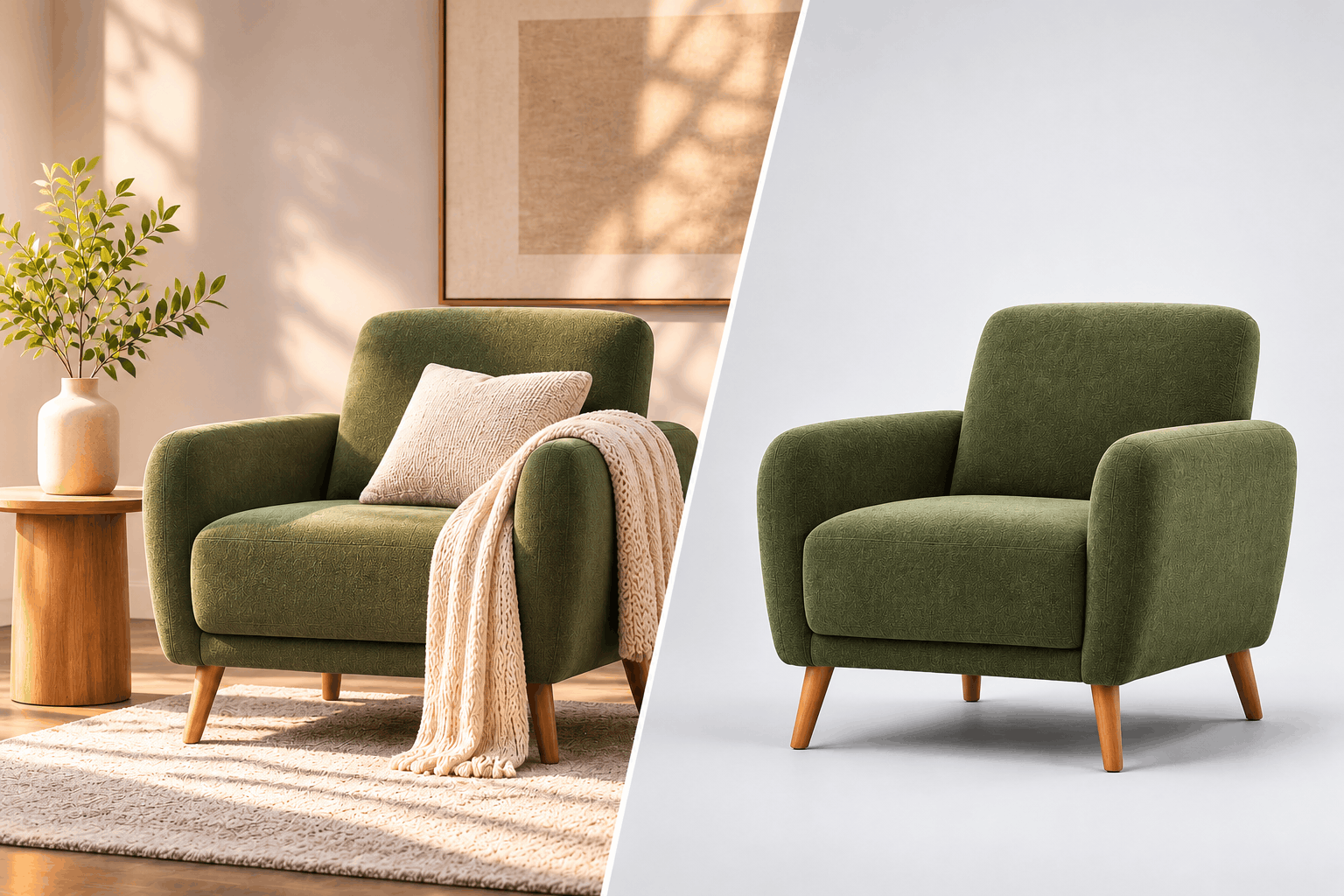
AI image generation and traditional furniture photography solve different problems. AI is useful for creating concepts and additional marketing variations, while professional photography provides reliable documentation of the actual product.
Cost and Production Requirements
Traditional photography may involve a studio, lighting equipment, stylists, photographers, and furniture transportation. AI can reduce some of these requirements when you're creating lifestyle variations from existing product images.
However, AI still involves software expenses, editing, and quality control. Complex products may require substantial manual correction.
Speed and Creative Flexibility
AI is particularly useful when you need to experiment with room settings or produce several concepts quickly. You can change the background or overall mood without rebuilding a physical set.
Traditional photography requires more preparation, but it gives you direct control over the actual furniture, lighting, and camera position.
Product Accuracy and Realism
Real photography remains the safer option for showing exact materials, colors, construction details, and dimensions. AI can generate realistic scenes, but it may unintentionally alter these features.
For furniture advertising, accuracy matters because customers rely on images to make purchasing decisions. A beautiful image won't help if the delivered product looks noticeably different.
When to Combine AI-Generated Images With Real Product Photography
A practical approach is to photograph the actual furniture first and use AI to create additional lifestyle settings.
This gives you accurate product references while allowing more flexibility with backgrounds and advertising concepts. Keep original product photos available on your website so customers can inspect the item without AI-generated surroundings.
Read more: AI Image Generation vs Traditional Design
Best Practices for Using an AI Image Generator in Furniture Marketing
Good AI product photography should make your furniture appealing without creating unrealistic expectations. The following practices help keep your marketing useful and credible.
Maintain Accurate Furniture Colors, Textures, and Dimensions
Check every generated image against the actual product. Upholstery colors, wood finishes, cushion shapes, and hardware should match what customers will receive.
If AI changes the furniture's appearance, correct the image before publishing it.
Create Realistic and Visually Appealing Interior Settings
Use believable room proportions, natural lighting, and furniture arrangements that make sense. A dining table shouldn't appear too large for the room, and a sofa shouldn't look as though it's floating above the floor.
Realistic settings help customers imagine the product in their homes without being distracted by obvious visual errors.
Keep AI-Generated Advertising Images Consistent With Your Brand
Use a recognizable visual style across your campaigns. Your brand might favor bright minimalist interiors, warm lifestyle photography, or colorful contemporary spaces.
Consistent styling helps connect your advertisements, even when you're promoting different furniture collections.
Follow Commercial Usage and Advertising Guidelines
Review the AI tool's commercial licensing terms before using generated images in advertisements. Check the applicable rules for your advertising platforms, including any AI-content disclosure requirements.
Avoid using protected logos, copyrighted characters, or recognizable people without appropriate rights. Advertising images should also accurately represent the products being sold.
Test AI-Generated Furniture Ads for Better Campaign Performance
Compare different creative approaches rather than assuming one image will appeal to everyone.
You could test a clean product-focused advertisement against a lifestyle image showing the furniture in a furnished room. Measure clicks, conversions, and other relevant results to identify which presentation works for your audience.
Common Challenges of AI Image Generation for Furniture Advertising
AI-generated furniture images can look convincing at first glance, but small inaccuracies may become obvious when customers look more closely. Catching these problems early can save you from publishing misleading advertisements.
Inaccurate Furniture Proportions and Product Details
AI may change the number of chair legs, alter a sofa's cushions, or modify a table's shape. These mistakes are particularly problematic when you're advertising a specific product.
Use clear reference photos and compare the output carefully before approving it.
Unrealistic Lighting, Shadows, and Reflections
Poorly generated lighting can make furniture appear pasted into a room. Shadows may fall in the wrong direction, or reflective surfaces may show objects that aren't present.
Choose scenes with consistent lighting and correct obvious visual errors during editing.
Inconsistent Product Appearance Across Multiple Images
The same armchair might appear slightly different across several AI-generated scenes. Fabric colors, proportions, and structural details can change between outputs.
Using the same reference images and clear product-preservation instructions can help reduce these inconsistencies. For high-stakes product visuals, manual compositing may be more reliable.
Copyright, Licensing, and Advertising Transparency Concerns
Commercial use rights vary between AI platforms, and generated content may raise intellectual property questions. Some advertising platforms also require disclosures for certain AI-generated or altered content.
Check the tool's terms, avoid copying protected creative work, and follow applicable advertising requirements. If an image is a conceptual visualization rather than an accurate product photograph, make that distinction clear when necessary.
Read more: How AI Image Generation Is Changing Digital Advertising
The Future of AI Image Generation in Furniture and Home Decor Advertising
AI is giving furniture brands new ways to present products online. As the technology improves, it may become easier to create accurate room visualizations, adapt marketing content, and offer more relevant shopping experiences.
Personalized AI-Generated Furniture Shopping Experiences
Shoppers may increasingly be able to view products in room styles that match their preferences. Instead of browsing the same generic product image, they could explore how a sofa looks in a minimalist apartment or a traditional living room.
These experiences can make online furniture shopping more useful, provided the visualizations accurately represent the products.
AI-Powered Virtual Staging and Interior Visualization
Virtual staging allows brands to place furniture in digitally created or modified rooms. It can help customers understand how different pieces work together without requiring a physical showroom for every collection.
As AI tools become more capable, these visualizations may offer greater control over room layouts, lighting, and product placement.
Integration of AI Image Generation With E-Commerce Marketing
AI image generation may become increasingly connected with ecommerce catalogs and marketing workflows. Brands could use product information and reference images to prepare advertising creatives for different campaigns and channels.
This could make it easier to maintain consistent product presentations while reducing repetitive creative work.
The Growing Role of AI in Furniture Advertising Campaigns
AI will likely continue expanding the creative options available to furniture retailers. Businesses can use it to explore new campaign concepts, prepare visual variations, and support faster content production.
Human review will remain important, especially when customers depend on images to understand the products they're buying.
Create Furniture Advertising Visuals With Leapify
Furniture and home decor advertising depends on helping customers picture products in their own spaces. An AI image generator gives you more ways to create those visuals without organizing a new photoshoot every time you want to try a different concept.
You can experiment with interior styles, prepare seasonal campaigns, and develop additional advertising creatives while keeping your actual furniture at the center of the message. The key is using AI to improve your presentation without compromising product accuracy.
Leapify helps businesses explore AI-powered advertising and more efficient creative workflows. If you're looking to produce more furniture marketing visuals and experiment with different advertising concepts, bringing AI into your process can make creative production easier to manage.
Ready to create more furniture and home decor advertising visuals? Sign up for Leapify and explore how AI can support your next creative campaign.
Frequently Asked Questions
What Is the Best AI Image Generator for Furniture Advertising?
The best AI image generator for furniture advertising depends on your creative needs and budget. Look for tools that support reference images, realistic interior settings, background editing, and commercial usage. Product consistency is especially important because the generated furniture should accurately match the items you're selling.
Can an AI Image Generator Create Realistic Furniture Product Images?
Yes. An AI image generator can create realistic furniture images, including studio-style product visuals and furnished room scenes. However, AI may change colors, textures, dimensions, or structural details, so businesses should review generated images against actual product photographs before using them in advertising.
How Can Furniture Brands Use AI-Generated Images for Advertising?
Furniture brands can use AI-generated images for product listings, lifestyle advertisements, social media content, seasonal promotions, and paid advertising campaigns. AI also makes it easier to test different room settings and creative approaches without arranging separate photoshoots for every variation.
Can I Use AI-Generated Furniture Images for Commercial Purposes?
Many AI image generation tools allow commercial use, but the terms vary by provider and subscription plan. Businesses should review licensing conditions, intellectual property considerations, and advertising platform requirements before publishing generated images. The visuals must also avoid misleading customers about the products being advertised.
Is AI Image Generation Cheaper Than Traditional Furniture Photography?
AI image generation can be cheaper than traditional furniture photography when creating multiple lifestyle settings, seasonal visuals, or advertising variations. It can reduce expenses related to studio rentals, props, transportation, and additional shoots. However, software subscriptions, editing, and quality control still contribute to the overall cost.