
Making one ad usually isn't the hard part. It's creating version after version for different audiences, platforms, formats, and tests that starts eating up the day. An AI ad generator can take a lot of that work off the team's plate by creating copy, images, videos, and fresh variations without having to start over each time.
With AI and automated ad creation, brands can reduce repetitive tasks and spend more time figuring out which ideas actually work. In this article, we explain how.
How AI-Powered Advertising Tools Work
An AI advertising tool takes the basic details of a campaign and turns them into ad creative. Teams can provide information about the product, audience, campaign goal, existing assets, or creative direction, then let AI generate different ideas and variations.
An AI ad creative generator can help with everything from copy and images to videos, resizing, and alternate versions. That means less jumping between tools and fewer hours spent creating the same ad in slightly different ways.
AI Ad Generator vs. Traditional Ad Creation
Traditional ad production usually moves through several steps and people. A marketer writes the brief, a copywriter develops messaging, a designer creates visuals, feedback goes back and forth, and the team eventually builds alternate versions for testing.
An AI ad generator can shorten many of those steps. It does not remove the need for strategy or human review, but it can get the team from idea to usable first drafts much faster.
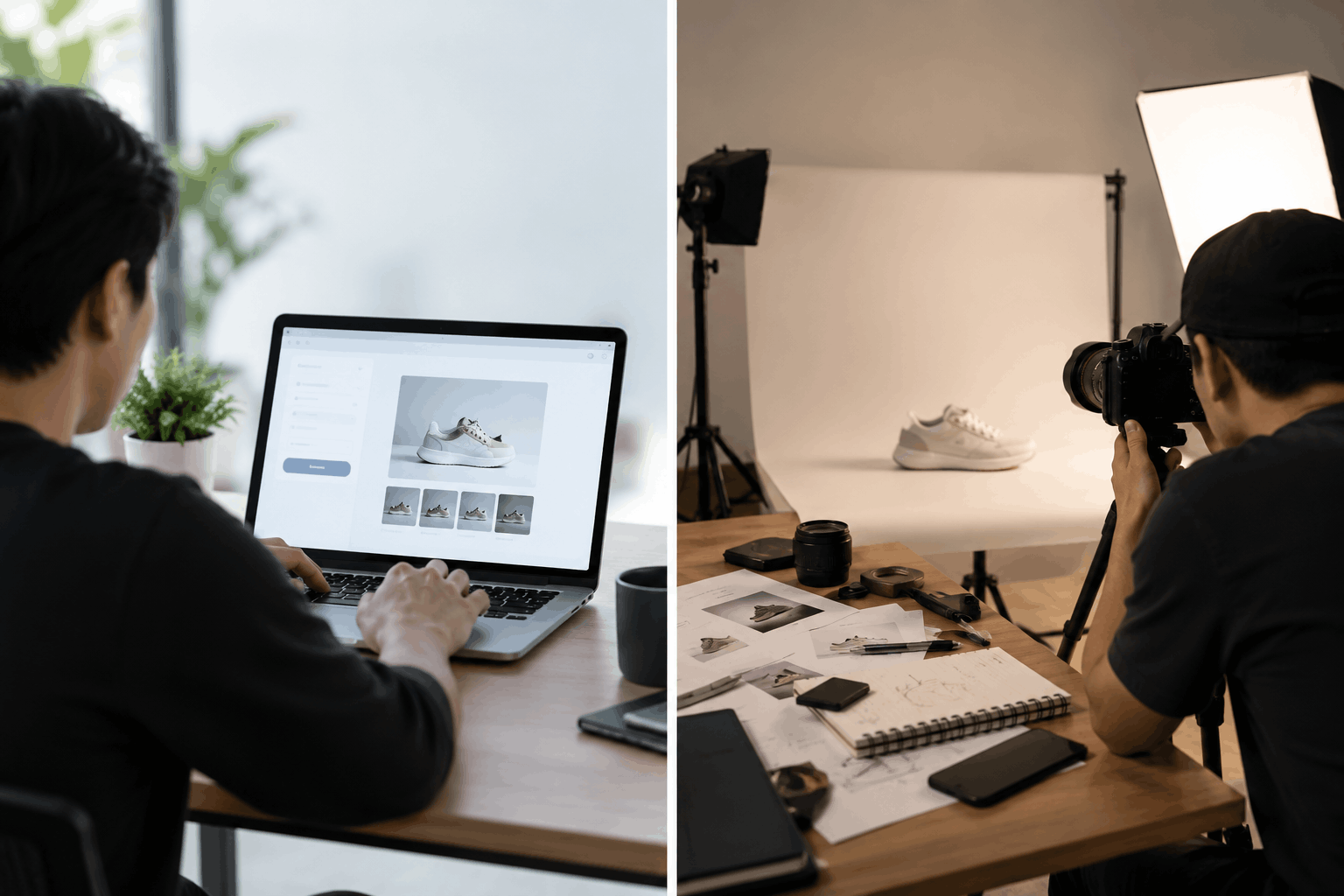
Why Traditional Ad Creation Takes So Much Time
Ad creation rarely stops at a single headline and a single image. Most campaigns need different hooks, copy lengths, aspect ratios, visuals, calls to action, and audience-specific versions.
Then there are revisions. One small change can mean editing several versions of the same creative across multiple placements.
The workload gets even heavier when brands run several campaigns or advertise many products at once. Creative production can quickly become the bottleneck, even when the marketing team already knows what it wants to test.
How an AI Ad Generator Saves Hours of Creative Work
A lot of ad creation comes down to the same time-consuming tasks: brainstorming ideas, writing variations, adjusting visuals, and creating new versions for testing. An AI ad generator takes some of the most time-consuming work off the team's plate. Here are a few ways it can speed up the creative process:
1. Generate Ad Concepts in Minutes
An AI ad generator can quickly suggest different hooks, pain points, benefits, offers, and campaign angles based on the same brief. The team can then choose the strongest ideas rather than manually brainstorming every possibility.
2. Speed Up AI Ad Creation and Copywriting
One ad may need a short headline, primary copy, CTA, product description, and several alternate versions. Writing each variation manually adds up fast.
AI ad creation can generate multiple starting points in a single pass. Copywriters and marketers can edit the strongest options rather than staring at a blank document every time a new variation is needed.
3. Create AI-Generated Ad Images Faster
Brands often need several visual concepts before finding one that performs well. Traditional production may require new photoshoots, graphic design work, or repeated edits to existing assets.
AI can speed up concept development and image creation, especially when teams need several visual directions for testing. Human review still matters, particularly for product accuracy and brand consistency.
4. Produce AI Video Ads Without Lengthy Production Cycles
Video can take even longer than static creative. Scripts, footage, voiceovers, captions, editing, and multiple aspect ratios all add production time.
AI tools can help with many of those steps. Teams can create scripts, assemble scenes, generate voiceovers, add captions, and produce variations much faster than a completely manual workflow.
5. Automate Repetitive Ad Creative Tasks
Sometimes the team simply needs the same campaign adapted for another format or platform.
Automated ad creation can reduce time spent on repetitive changes such as resizing, rewriting copy lengths, creating variations, or adapting existing creative. Those small tasks may only take a few minutes each, but across dozens of ads, the hours add up.
6. Create More Ad Variations for A/B Testing
Testing works better when teams actually have enough creative to test. The problem is that producing all those variations manually can slow campaigns down.
An AI ad creative generator can quickly generate several versions of headlines, visuals, hooks, and calls to action. Teams can test more ideas without putting the creative department through another marathon production cycle.
7. Refresh Ad Creative Before Fatigue Sets In
Even a strong ad can lose performance when people see it too often. Brands need fresh creative before the audience gets tired of the old version.
AI-powered advertising makes those refreshes easier. Teams can build new variations around proven concepts rather than creating an entirely new campaign every time performance starts to drop.
Read more: 7 Ways to Create Scroll-Stopping Ads with AI Video
How AI Ad Creative Generators Improve Creative Workflow Efficiency
Faster generation is useful, but the bigger advantage is what happens to the overall workflow. Fewer repetitive steps can make it easier for marketing and creative teams to keep campaigns moving.
Move From Brief to First Draft Faster
A clear brief can go directly into an AI tool and produce several starting points. That means teams can begin reviewing and refining ideas sooner.
The first draft does not have to be perfect. Its job is to give the team something useful to work with rather than starting from scratch.
Reduce Bottlenecks Between Marketing and Creative Teams
Creative teams often have several campaigns competing for attention. Small requests such as another headline variation or resized graphic can pile up.
AI can handle some of that production work before it reaches a designer or copywriter. Creative professionals can then spend more time on higher-value concepts and final quality.
Centralize More of the Creative Process
Jumping between separate copy, image, video, and editing tools can make simple projects feel unnecessarily complicated. Platforms that combine several AI creative functions can reduce those handoffs.
A more centralized workflow also makes it easier to keep assets organized and produce campaign variations from the same core concept.
Spend More Time on Strategy Instead of Production
Marketers should not spend most of their day resizing ads or rewriting the same headline six different ways. Those tasks are necessary, but they are not where the biggest decisions happen.
AI can take on more repetitive production so teams have more time for audience research, positioning, campaign strategy, creative analysis, and optimization.
Benefits of Using an AI Advertising Tool
Speed is the obvious benefit, but it is not the only one. A good AI advertising tool can change how much creative a team can realistically produce and test.
Faster Creative Turnaround
Teams can move from campaign idea to initial creative much faster. This is useful for time-sensitive promotions, product launches, and fast-moving paid social campaigns.
Greater Creative Output
One campaign idea can quickly become several headlines, visuals, videos, and audience-specific variations. Small teams can produce a larger creative library without manually building every asset.
More Consistent Creative Testing
More creative makes regular testing easier. Teams can compare different hooks, formats, visuals, and messaging without waiting days for every new variation.
Easier Campaign Scaling
Scaling often means producing more creative for more products, audiences, and channels. AI makes that workload easier to manage as campaign volume increases.
Lower Repetitive Production Work
AI is especially useful for work that needs to get done but does not require hours of human time. That includes basic variations, resizing, first drafts, and repeated adaptations of existing creative.
Read more: Can an AI Ad Generator Replace Creative Agencies?
Who Can Benefit Most From an AI Ad Generator?
An AI ad generator can help almost any team that regularly produces paid creative, but it becomes especially useful when creative volume starts to grow.
It can work well for:
- E-commerce brands that advertise many products
- Small businesses without large creative teams
- Agencies that manage several client accounts
- Startups that need to test ideas quickly
- Performance marketing teams that run frequent creative tests
- Social media teams that need a steady flow of fresh ads
The common problem is the same: there are more ads to make than hours available to make them.
How to Use an AI Ad Generator Effectively
AI can speed up creative production, but vague inputs usually yield vague ads. A simple process helps teams get better output.
Start With a Clear Creative Brief
Define the product, audience, campaign objective, main message, offer, and desired action. Give the tool enough direction to understand what the campaign needs to accomplish.
The clearer the brief, the less time the team will spend correcting generic output later.
Provide Strong Brand and Product Inputs
Feed the tool accurate product information, existing creative, brand guidelines, tone, and other useful assets. AI works better when it has good material to work from.
This also reduces the chance of producing creative that looks completely disconnected from the brand.
Generate Multiple Creative Directions
Do not ask for one ad and call it done. Generate several hooks, angles, visual concepts, and copy variations.
The point of AI is not simply to make one asset faster. It also makes experimentation easier.
Review Every AI-Generated Ad
AI can produce incorrect claims, awkward wording, strange visuals, or content that does not match brand guidelines. Every asset should be checked before it goes live.
Humans still need to verify accuracy, quality, compliance, and overall fit with the campaign.
Test, Measure, and Iterate
The real test of an ad is how it performs. Launch controlled variations, compare results, and use that data to decide what comes next.
Winning concepts can then become the starting point for another round of AI-assisted variations.
Read more: Best Ways to Use an AI Ad Generator for Product Campaigns
What to Look for in the Best AI Ad Generator
The right tool should save work rather than create another complicated workflow. Features will vary, so businesses should focus on what they actually need.
Useful capabilities may include:
- Ad copy generation
- Image generation and editing
- Video ad creation
- Multiple creative variations
- Brand customization
- Format and platform adaptation
- Creative workflow automation
- Easy asset management
- Fast iteration
The strongest option is not necessarily the one with the longest feature list. It is the one that removes the most friction from the team's actual creative process.
AI Ad Generators and the Future of Creative Automation
AI can speed up ad creation, but people still need to steer the creative process. They know the brand, understand the audience, and can tell the difference between an ad that simply looks good and one that actually makes sense for the campaign.
As AI-powered advertising handles more of the repetitive work, teams can spend less time producing endless variations and more time figuring out which ideas connect with customers and drive results.

Save More Creative Time With an AI Ad Generator
Creating ads will always take work, but not every variation needs to start from a blank page. An AI ad generator can speed up concept development, copy, image and video production, testing variations, and creative refreshes while keeping humans in control of the final decisions.
Leapify helps teams bring AI ad creation, creative automation, and campaign production into a faster workflow. If the team is spending too many hours creating the same types of ads over and over, try Leapify to put more of that time back into strategy and growth.
Frequently Asked Questions
How Much Time Can an AI Ad Generator Save?
It depends on the campaign and workflow, but an AI ad generator can significantly reduce time spent on brainstorming, first drafts, creative variations, resizing, and repetitive production. The biggest savings usually appear when teams need a high volume of ads.
Can an AI Ad Generator Create Both Images and Video Ads?
Yes, some AI ad generators can create or assist with both image and video ads. Features vary by platform, so businesses should check what each tool supports before choosing one.
Can AI Create Multiple Ad Variations for Testing?
Yes. Creating variations is one of the most useful parts of AI ad creation. Teams can quickly test different headlines, hooks, visuals, formats, and calls to action without manually rebuilding every ad.
Does an AI Ad Generator Replace Designers and Copywriters?
No. AI can handle first drafts and repetitive production, but designers, copywriters, and marketers still provide strategy, creative judgment, brand direction, editing, and quality control.
Are AI-Generated Ads Suitable for Paid Social Campaigns?
Yes. AI-generated ads can be used for paid social campaigns after proper human review. Teams should check each ad for accuracy, brand consistency, platform requirements, and advertising compliance before publishing.




.png)