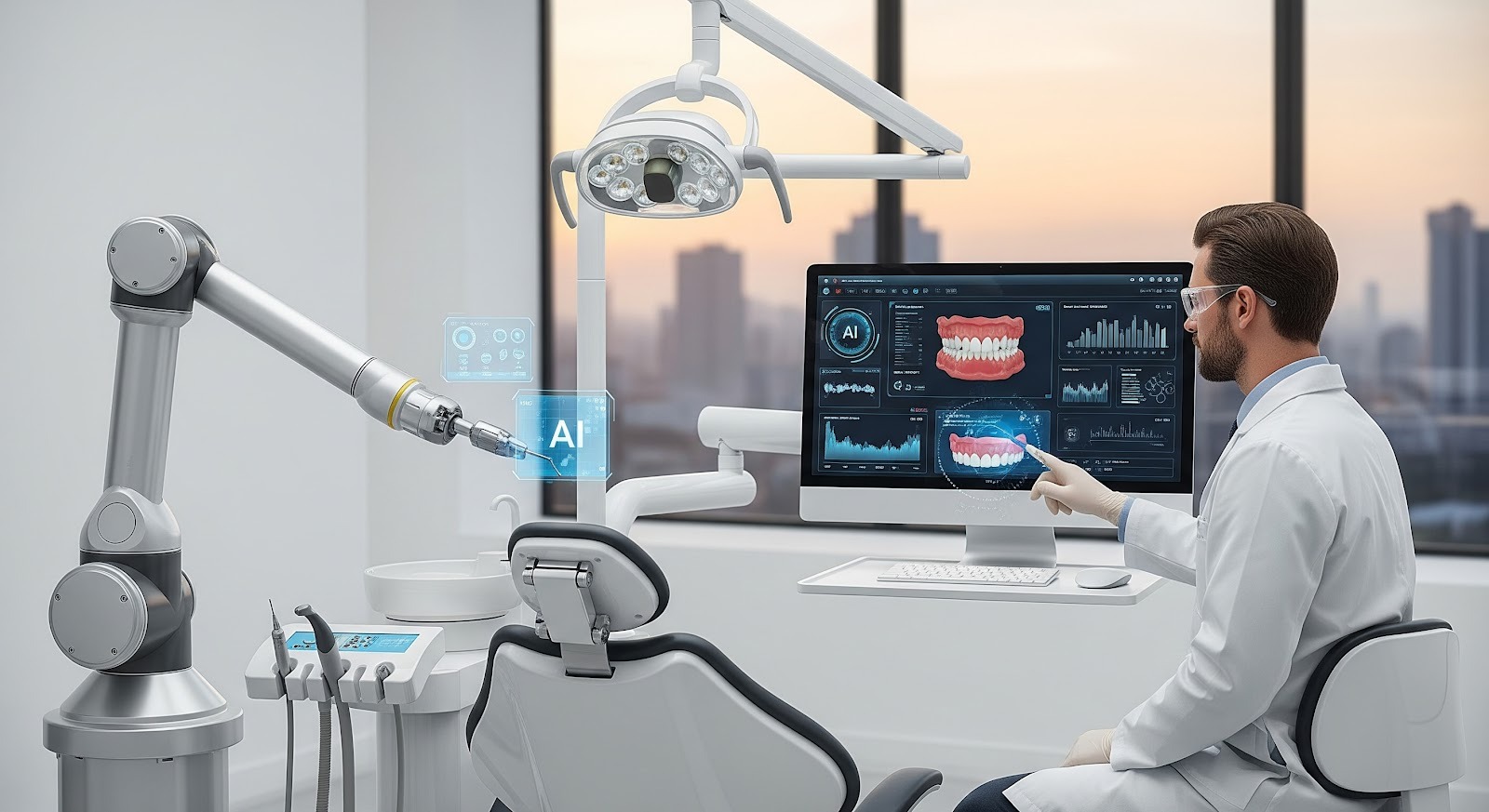
Artificial intelligence is changing the way dental clinics work, and it’s doing it in all the right ways. Instead of spending hours on routine tasks or second-guessing diagnoses, dentists now have technology that helps them make faster, smarter, and more precise decisions. This is quietly reshaping how dental clinics operate.
So how exactly does this technology fit into modern dental care? Let’s take a closer look at how artificial intelligence is shaping everything from diagnostics to patient communication, and why clinics adopting it today are setting a new standard for smart dentistry.
Artificial Intelligence and Its Impact on Dentistry
Times are changing and today, artificial intelligence dental technology has now become part of daily clinical life. It interprets dental images, supports treatment planning, predicts patient outcomes, and even manages scheduling and communication.
This has accelerated the industry and clinics using AI dental software are seeing improvements in efficiency, accuracy, and patient satisfaction.
AI in dental clinics connects data from imaging, patient history, and behavioral insights. The technology also helps dentists make informed choices without slowing down workflow. If you’re a dental clinic or a dentist looking for ways to improve operations, having your own AI assistant in your clinic can help you stay ahead in the industry.
Key Applications of AI in Dentistry
Artificial intelligence touches every stage of dental care, and its impact is growing rapidly.
AI for Dental Diagnostics
AI diagnosis in dentistry allows systems to analyze X-rays, CT scans, and 3D images with clarity that rivals or even exceeds the human eye. Dental AI tools recognize subtle irregularities that may indicate decay, fractures, or bone loss long before they become visible to patients. By improving early detection, AI helps dentists treat proactively instead of reactively.
AI in Treatment Planning
When it comes to complex procedures, such as orthodontics or implant placement, AI dental software provides detailed simulations that forecast outcomes. Dentists can visualize adjustments before making them and customize each treatment plan based on a patient’s unique structure and oral history. Predictive modeling saves time and reduces the margin for error.
Predictive Analysis and Preventive Care
Predictive dental analytics turn years of patient data into practical insights. These systems can identify risk patterns, like patients likely to develop gum disease or cavities, and suggest personalized preventive strategies.
AI in Dental Imaging and Radiology
AI dental imaging tools refine the clarity of X-rays, improve exposure balance, and help interpret radiographs faster. That accuracy means fewer retakes and more confidence in diagnosing hidden or early-stage conditions. Patients benefit from faster visits and clearer explanations of their results.
AI Chatbots and Virtual Assistants
Smart dentistry doesn’t stop at clinical work. Many practices now use AI chatbots to manage appointment bookings, reminders, and FAQs around the clock. These systems reduce front-desk pressure while keeping patients informed and connected.
AI in Dental Education and Training
AI is also transforming how dental professionals learn. Digital simulations now allow students and trainees to practice procedures in virtual environments where mistakes cost nothing and every outcome becomes a lesson. This technology helps future dentists develop stronger diagnostic and procedural skills before ever treating a live patient.

Benefits of Using AI in Dentistry
Adopting AI in dentistry gives clinics measurable advantages. It improves diagnostic accuracy, speeds up daily operations, and enhances patient experiences from consultation to aftercare.
Improved Diagnostic Accuracy
AI systems process thousands of data points instantly. That consistency removes the fatigue or oversight that can affect manual reviews, leading to earlier intervention and better treatment precision.
Faster and More Efficient Workflow
Dental automation software reduces administrative burden by handling scheduling, billing, and patient reminders automatically. Teams spend less time on repetitive tasks and more time building relationships with patients.
Enhanced Patient Experience
AI in dental clinics creates smoother, shorter appointments and accurate communication. Predictive tools even recommend preventive visits based on individual patterns, helping patients stay ahead of potential issues.
Better Treatment Outcomes
AI provides dentists with clear visual data that supports customized treatment plans for every patient, improving comfort and long-term results.
Cost Savings Over Time
While integrating artificial intelligence dental technology requires investment, the long-term payoff is substantial. Clinics see fewer errors, optimized staffing, and better retention thanks to consistent care and patient trust.
How to Implement AI in Your Dental Practice
Integrating AI dental software into an existing workflow is easier than it seems when approached methodically.
Identify Areas to Automate
Look at recurring pain points: appointment management, patient reminders, diagnostic review, or data entry. Start with one or two high-impact areas where automation will free up time for care.
Choose the Right AI Tools
Selecting the right dental AI tools depends on your clinic’s size and goals. Some systems specialize in imaging, others in communication or predictive dental analytics. Choose software that integrates smoothly with your current practice management systems.
Train Your Staff
AI works best when your team feels confident using it. Provide training that explains how algorithms assist decision-making and when human expertise should take the lead. Comfort with the technology is key to trust and accuracy.
Ensure Data Privacy and Compliance
AI depends on data, so security cannot be an afterthought. Use AI dental platforms that comply with HIPAA and maintain transparent data-handling practices. Protecting patient information builds long-term confidence in your clinic.
Monitor and Optimize Results
Treat implementation as an evolving process. Track diagnostic accuracy, appointment times, and patient feedback to measure improvement. When insights reveal new opportunities, adjust and expand your system gradually.

Why Dentists Should Embrace AI Now
Clinics that use AI in dentistry gain practical advantages now: faster workflows, more accurate diagnoses, and data-driven decision-making that keeps patients coming back.
AI-powered systems such as predictive dental analytics also enable clinics to understand patient behavior better, anticipate needs, and tailor services more effectively. The longer practices wait to adopt these technologies, the more ground they lose to competitors already optimizing through AI.
Smarter Clinics Start with Predictive AI Tools
The dental industry is entering a new phase where technology complements expertise, not competes with it. Predictive systems, automated workflows, and intelligent diagnostics allow dentists to focus on personalized, high-quality care.
Leapify CRM helps make that possible. Its predictive AI CRM gives dental professionals the ability to manage patient data, automate outreach, and forecast appointment trends within a single platform. Connecting insights across your practice builds a complete digital foundation that supports smarter dentistry.
To explore how AI can improve patient care and streamline your clinic’s workflow, visit Leapify to see how predictive AI can transform your practice.