
Brands need more video creative than ever, but producing more videos doesn't have to mean booking more shoots, hiring larger teams, or watching production costs climb with every campaign. Scalable video production focuses on getting more useful creative from the assets and resources you already have, with video creative automation and AI video creation helping handle repetitive production work.
So, how do you increase creative output without turning the video budget into a problem of its own? It starts with changing how videos are planned, produced, and reused. Here’s how brands can increase video output without increasing production costs at the same pace.
Why Brands Need More Video Creative Than Ever
Video is now used across paid social, organic social, ecommerce, landing pages, display campaigns, product launches, and retargeting. Each channel may need different formats, messages, lengths, and creative styles, which means one polished campaign video rarely covers everything a marketing team needs.
More Platforms Require More Creative Variations
A horizontal YouTube video won't automatically work as a TikTok or Instagram Reel, and a 30-second ad may be too long for another placement. Brands need multiple aspect ratios, lengths, hooks, captions, and edits to make the same campaign work across channels, quickly turning one video idea into a much larger creative workload.
Audience Fatigue Shortens the Lifespan of Video Creative
Even strong video ads can lose momentum once the same audience has seen them repeatedly. Performance teams need fresh hooks, openings, visuals, and edits to keep campaigns from relying on the same creative for too long. Producing those refreshes manually can get expensive surprisingly fast.
Performance Marketing Depends on Continuous Creative Testing
Performance marketing works better when teams can test different ideas and learn from actual campaign results. One video might lead with a customer problem, another with the product benefit, and another with an offer. More meaningful variations give marketers a clearer picture of what gets attention and drives action.
Personalisation Creates Demand for Even More Video Assets
Different audiences may respond to different products, benefits, offers, or messaging. Creating video creative for specific customer segments can improve relevance, but it also multiplies the number of assets the team needs to produce. A scalable workflow makes that level of variation much easier to manage.
Read more: How Creative Automation Supports Performance Marketing
Why Traditional Video Creative Production Becomes Expensive at Scale
Traditional production works well when brands need polished hero content, but repeating the same process for every performance ad can become expensive. Shoots, crews, equipment, locations, talent, editing, and post-production all add time and cost, especially when campaigns need new creative every few weeks.
Production Costs Increase With Every New Shoot
Every additional shoot can bring another round of planning, locations, equipment, talent, crew, and post-production. Those expenses may make sense for major campaigns, but repeatedly booking full productions simply to keep paid media fresh can quickly stretch the marketing budget.
Small Video Variations Often Require Disproportionate Production Work
Sometimes the team doesn't need an entirely new video. It just needs a different opening, product benefit, call to action, or audience angle. A traditional workflow can make those relatively small changes feel like much larger projects because someone still has to locate footage, edit the sequence, update graphics, export the file, and prepare it for each placement.
Manual Editing Creates a Creative Bottleneck
Editors can easily become the final stop for every variation, resize, caption change, and new version. When all of that work is handled manually, even simple requests pile up. Creative automation can remove some of those repetitive tasks so editors have more time for work that actually needs their judgment and skill.
Traditional Production Cycles Can Be Too Slow for Performance Marketing
Performance campaigns generate feedback quickly. A team may learn within days that one hook or angle deserves another round of testing, but a traditional production cycle can take much longer to respond. Faster creative workflows help marketers act on those insights while they're still useful.

What Does Scaling Video Creative Actually Mean?
Scaling video creative isn't simply producing as many videos as possible. It means increasing useful creative output without requiring production resources to grow at the same rate. The focus shifts from making individual videos to building a system that can create, adapt, and test content repeatedly.
Increasing Creative Volume
A scalable workflow gives teams the ability to produce more usable videos within the same production cycle. One set of footage, for example, might support several ads, product videos, social clips, and retargeting assets rather than becoming one final campaign video.
Increasing Creative Variations
Scaling also means creating different versions of a core idea. Hooks, calls to action, product benefits, offers, visuals, voiceovers, and endings can all become variables, allowing marketers to explore new directions without rebuilding the entire video each time.
Increasing Creative Testing Velocity
More variations only help if the team can actually test and learn from them. Scalable video production shortens the time between an idea, a live test, and the next iteration, helping performance teams respond faster to what campaign data is showing them.
Expanding Video Creative Across Channels
Scaling also involves adapting content to different placements. A core video concept can become a vertical social ad, square feed video, short bumper, longer YouTube version, or ecommerce asset without treating every format as a completely separate production.
How to Scale Video Creative Without Increasing Production Costs
The easiest way to scale isn't necessarily to create more from scratch. Brands can get much more from each production cycle by planning content around reusable components, templates, and existing assets from the beginning.
Build Modular Video Creative Instead of One-Off Ads
Modular production treats hooks, product shots, testimonials, benefits, offers, and calls to action as separate pieces that can be recombined. A team might film five openings, three product demonstrations, and three endings during one shoot, then use those pieces to create several complete ads instead of locking everything into one fixed edit.
Turn One Production Shoot Into Multiple Video Assets
Plan each shoot with reuse in mind. Capture different hooks, angles, product shots, customer statements, demonstrations, and short-form clips while the cameras are already rolling. A little extra planning during production can create weeks or months of usable material without requiring another full shoot.
Create Repeatable Video Templates
Templates give teams a consistent structure for recurring video needs such as product ads, promotions, testimonials, explainers, and social content. Instead of rebuilding layouts, transitions, captions, and branding each time, marketers can update the parts that actually need to change.
Repurpose Existing Content Into New Video Creative
Brands often already have useful footage sitting in old ads, product demos, webinars, testimonials, interviews, and social posts. Those assets can be recut into shorter videos, new hooks, different formats, and updated campaign concepts. Before booking another shoot, it may be worth checking what the content library can already provide.
Read more: How AI Video Ads Reduce Production Costs
How Video Creative Automation Helps Brands Scale
Once a reusable content system is in place, video creative automation can take over many of the repetitive tasks that slow production down. Teams can generate variations, adapt formats, and update recurring elements much faster without asking an editor to manually rebuild every version.
What Is Video Creative Automation?
Video creative automation uses software and AI to handle repeatable production tasks such as versioning, resizing, text changes, captions, asset replacement, and exporting. The creative team still defines the concept and rules, while automation handles more of the mechanical work needed to turn those decisions into finished assets.
Automatically Generate Multiple Creative Variations
A single video structure can produce versions with different hooks, headlines, products, offers, calls to action, or visual assets. This gives performance teams more creative to test while reducing the manual editing required for every individual variation.
Automatically Resize Video Creative for Different Platforms
Automation can help adapt approved videos to vertical, square, and horizontal formats for different placements. Teams still need to check that text, products, faces, and important visual elements remain properly framed, but the initial resizing work can happen much faster.
Use Dynamic Inputs to Produce Videos at Scale
Templates can pull in different product images, prices, offers, copy, and other campaign information to generate videos at higher volume. This can be especially useful for ecommerce brands with large catalogs or campaigns that need localized or audience-specific variations.
Read more: AI Video Ads for Product Launch Campaigns
Using AI Video Creation to Reduce Production Costs
AI video creation adds another layer of flexibility by helping with tasks that previously required additional production resources. It can support early concepts, voiceovers, visual assets, editing, and even presenter-led content, giving teams more ways to create without organizing a full shoot for every idea.
AI-Generated Video Concepts and Storyboards
AI can help marketers turn a campaign brief into scripts, hooks, scene ideas, and rough storyboards before production begins. This makes it easier to explore several concepts quickly and decide which ones are worth developing before significant time or budget is involved.
AI-Generated Voiceovers
AI voice tools can create narration in different styles, languages, and tones without scheduling a new recording session for every variation. They can be particularly useful for performance ads, localization, explainers, and frequent copy updates, provided the final voice fits the brand and campaign.
AI Avatars and Digital Presenters
AI avatars can provide an alternative for certain presenter-led videos, tutorials, explainers, or localized content. They won't suit every brand or campaign, but they can reduce the production required when teams need straightforward talking-head content at higher volume.
AI-Assisted Video Editing
AI can help with clipping footage, captions, transcription, scene selection, background removal, and other repetitive editing tasks. Editors can then spend more of their time shaping pacing, storytelling, and overall creative quality rather than handling every mechanical step manually.
AI-Generated Images and Visual Assets for Video Creative
Not every visual in a video needs its own photoshoot or custom design project. AI-generated backgrounds, illustrations, scenes, and supporting imagery can fill creative gaps and give teams more visual options, particularly for concepts that would otherwise require expensive locations, props, or sets.
Read more: Why 500+ Brands Switched to Creative Automation This Year
How Creative Automation Supports Performance Marketing
Performance marketing moves quickly, and creative automation helps production keep pace with what the data is saying. When a hook performs well, teams can create new versions around it. When an offer changes, existing templates can be updated, and when a concept starts losing momentum, fresh variations can be produced without restarting the entire process. This creates a tighter loop between testing, learning, and producing the next round of video creative.
How to Reduce Video Ad Production Costs Without Sacrificing Quality
Reducing video ad production costs doesn't have to mean making everything cheaper-looking. Start by spending traditional production resources where they add the most value, such as hero footage, important product demonstrations, or original brand assets. Then extend those assets through templates, repurposing, AI video creation, and automation. Strong source material plus a scalable workflow can often produce better results than constantly starting over with smaller, rushed shoots.
What Should and Shouldn't Be Automated in Video Creative?
Automation works well when the task follows clear rules, but creative work also involves context, taste, and judgment. The goal isn't to automate every part of video production. It's to automate the work that doesn't need someone making a fresh creative decision every single time.
Video Creative Tasks That Work Well With Automation
Resizing, captions, transcription, versioning, asset replacement, basic localization, copy changes, formatting, and exporting are all good candidates for automation. These tasks can take a surprising amount of production time while adding relatively little strategic value when performed manually.
Creative Decisions That Still Benefit From Human Input
Campaign strategy, brand positioning, storytelling, humor, emotional tone, visual direction, product claims, and final quality control still benefit heavily from human judgment. AI can provide options, but marketers and creatives need to decide which ideas fit the audience and which ones should stay in the drafts folder.
Why the Best Approach Combines Human Creativity and Automation
Human creativity provides the concept, context, and taste. Automation helps turn those decisions into more usable assets without repeating the same production work over and over. Combining the two gives teams a way to increase creative output while keeping people involved where their judgment has the greatest impact.
When Should Brands Invest in Video Creative Automation?
Video creative automation becomes especially useful when the team regularly produces similar formats, needs frequent performance variations, manages multiple channels, works with large product catalogs, or spends too much time making small edits to existing videos. If editors are constantly resizing the same ads, changing one line of copy, or creating near-identical versions for different products, there's probably a useful automation opportunity hiding in that workload.
The Future of Scalable Video Creative
Scalable video production is moving toward workflows where original footage, templates, AI, and automation work together. Brands can capture high-quality source material once, then turn it into a much larger library of channel-specific, audience-specific, and campaign-specific creative. As AI tools improve, the production process can become less focused on repeatedly building videos from scratch and more focused on deciding which ideas are worth creating and testing.
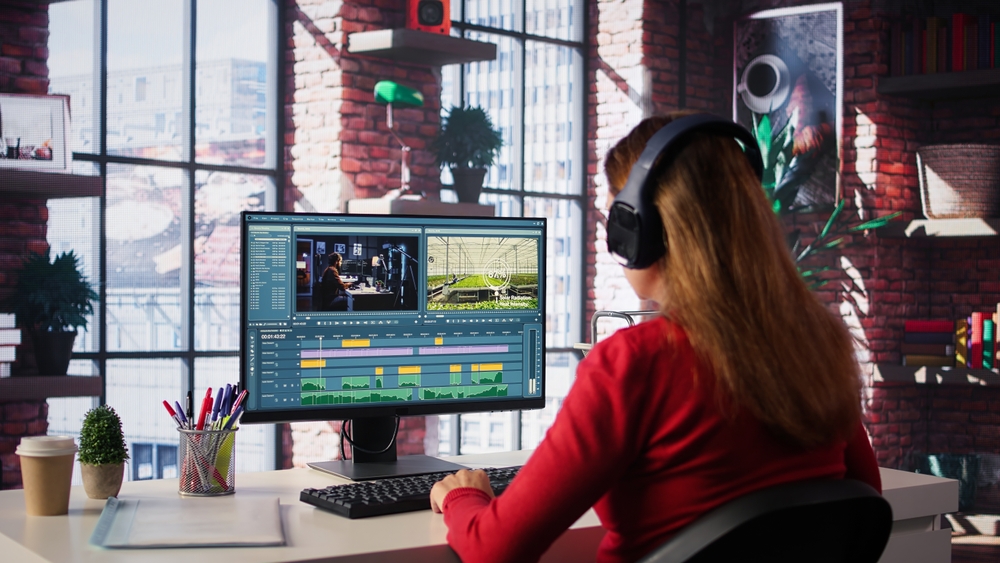
Scale Video Creative, Not Production Overhead
Producing more video shouldn't automatically require more shoots, more editors, and a larger production budget. Modular footage, reusable templates, existing content, AI video creation, and creative automation can help brands increase output while keeping the production process manageable.
Leapify helps marketing teams create and scale advertising creative with AI without turning every new variation into another production project. Teams can develop new video concepts, produce more variations, and keep creative testing moving while getting more value from the assets they already have.
Ready to create more video without adding another production marathon to the calendar? Sign up for Leapify today and start creating.
Frequently Asked Questions
How Can Brands Scale Video Creative Without Increasing Production Costs?
Brands can scale video creative by capturing reusable footage, building modular assets and templates, repurposing existing content, and automating repetitive production tasks. AI video creation and video creative automation can also help generate additional variations without requiring a new shoot for every ad.
Can AI Reduce Video Production Costs?
Yes. AI can reduce some video production costs by helping with concepts, scripts, voiceovers, editing, visual assets, versioning, and other tasks that would otherwise require additional production time. Actual savings depend on the workflow, tools, creative requirements, and amount of human involvement needed.
How Many Video Creative Variations Should Brands Test?
There is no universal number of video creative variations every brand should test. The appropriate amount depends on campaign budget, audience size, platform, testing strategy, and how much data each variation needs to generate useful insights. Focus on testing meaningful differences rather than producing a large number of nearly identical videos.
Does Scaling Video Creative Reduce Quality?
Scaling video creative does not automatically reduce quality. Reusable templates, strong source footage, clear brand guidelines, automation, and human review can help teams increase output while maintaining a consistent creative standard.
What Video Creative Elements Should Brands Test?
Brands can test hooks, opening scenes, product benefits, offers, calls to action, video length, pacing, voiceovers, captions, visual styles, and endings. Testing one or a few meaningful variables at a time can make it easier to understand what influenced campaign performance.