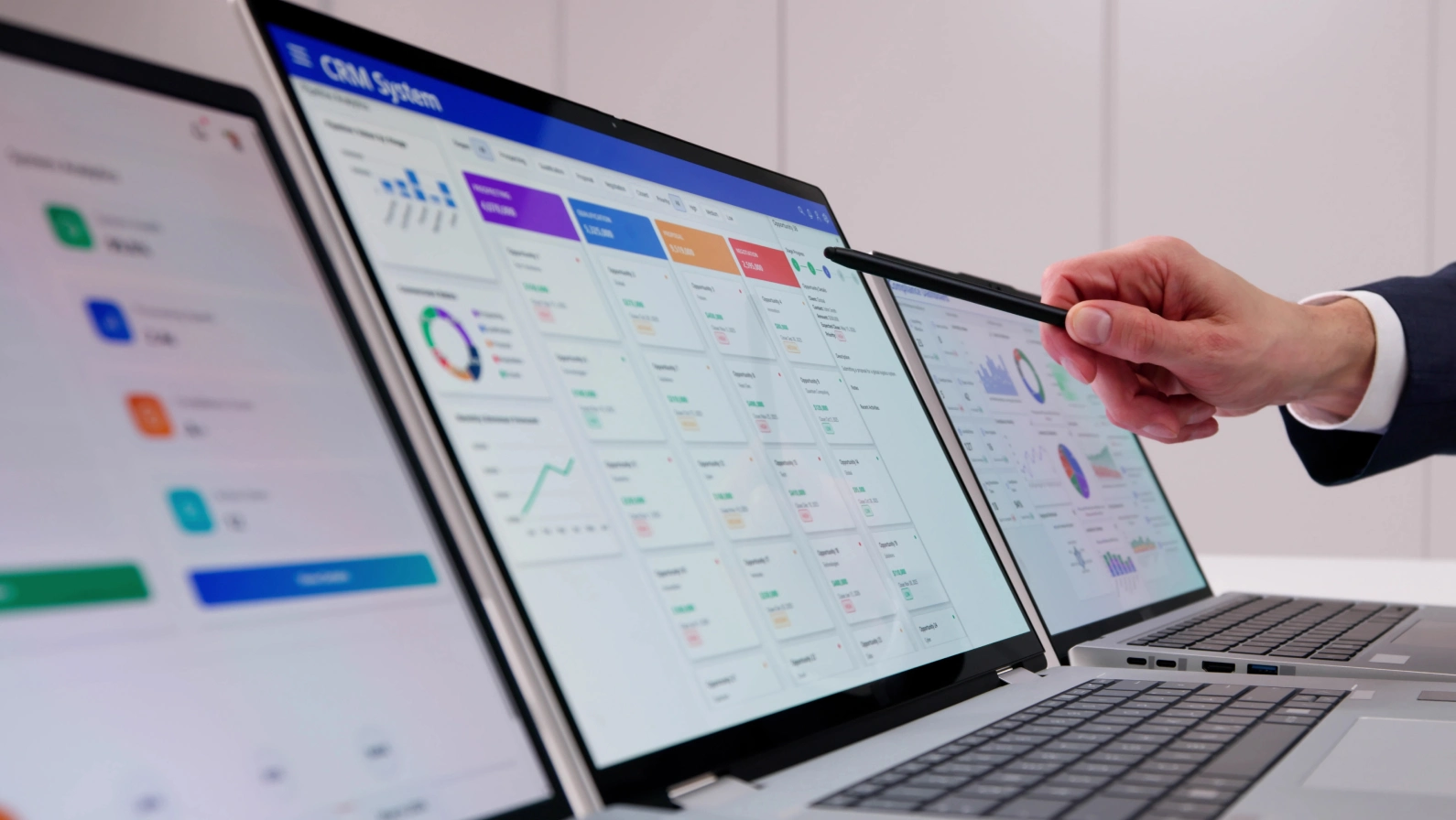
Most service businesses already have a CRM. The real problem is that it barely gets used.
CRM adoption for service businesses continues to lag, even though customer data, follow-ups, and scheduling are central to daily operations. Many owners ask the same question: Why invest in CRM software if the team avoids it? The answer has less to do with training and more to do with how traditional CRMs fit into real service workflows.
This article breaks down why service businesses don’t use CRM systems, the operational cost of low adoption, and how AI CRM for service businesses finally makes CRM software usable instead of burdensome.
The Intended Role of CRM in Service-Based Operations
In theory, a CRM should act as the central system for customer information, lead tracking, follow-ups, and scheduling. For service business CRM software, the goal is simple: keep teams organized while improving customer experience.
CRMs are meant to support technicians, sales reps, and customer service teams by storing conversations, logging activity, and creating consistency. When used properly, CRM automation for service businesses helps reduce missed leads, improve response times, and maintain visibility across operations.
The challenge starts when theory meets reality.
Why CRM Adoption Breaks Down in Practice
Many CRM challenges for service businesses stem from the same core issue. Traditional CRM systems require constant manual input to stay useful.
Teams are expected to log calls, update records, schedule follow-ups, and manage pipelines while also answering phones, handling jobs, and responding to customers. Over time, CRM usage problems pile up.
This is why service businesses don’t use CRM tools consistently. The system feels like extra work instead of real support.
The Operational Impact of Poor CRM Usage

Low CRM adoption does not stay contained inside the software. It directly affects daily operations.
Missed follow-ups lead to lost revenue. Inconsistent records create confusion. Managers lose visibility into performance. Customers repeat information because details never get logged.
When CRM usage problems persist, teams rely on memory, sticky notes, inboxes, or spreadsheets. That patchwork approach creates risk as the business grows.
Overreliance on Manual Discipline in Traditional CRM Systems
Most traditional CRMs assume people will behave like systems. They depend on discipline, consistency, and constant attention.
Service businesses operate in fast-moving environments. Calls come in during jobs. Messages arrive after hours. Leads appear when teams are busy. Manual CRM updates fall behind quickly.
This overreliance on discipline explains why improving CRM adoption feels like an uphill battle. The problem is not effort. The problem is design.
How AI Transforms the CRM Experience
AI changes the role of CRM from a data-entry tool into an active participant in daily operations.
AI CRM for service businesses captures interactions automatically, updates records in real time, and reduces the need for manual input. Instead of asking teams to feed the system, the system supports the team.
Modern platforms like Leapify CRM use AI to manage conversations, automate workflows, and surface insights without extra steps.
Improving CRM Adoption Through AI-Driven Automation
AI-driven CRM automation for service businesses removes the biggest barriers to adoption.
Leads are logged automatically. Follow-ups are triggered based on behavior. Scheduling happens without manual coordination. Communication stays consistent even outside business hours.
When the CRM works in the background, teams engage with it naturally. This is how improving CRM adoption actually happens.
Businesses exploring automation can see how this works through Leapify’s AI-powered workflows.
Aligning CRM Functionality With Real Service Workflows

Service businesses do not operate like sales-heavy enterprises. Work happens in the field, on the phone, and across departments.
AI CRM systems align with this reality by supporting inbound lead management, appointment scheduling, and customer communication in one place. Instead of switching tools, teams rely on a single system that reflects how work gets done.
This alignment is why AI CRM for service businesses sees higher adoption than traditional tools.
Measurable Business Outcomes of Higher CRM Adoption
When CRM adoption improves, results follow.
Faster response times improve conversions. Automated follow-ups reduce drop-offs. Clear visibility supports better decisions. Customer experience becomes consistent.
These outcomes matter because service businesses compete on reliability and responsiveness. CRM automation for service businesses directly supports both.
Key Capabilities to Look for in an AI-Powered CRM
Not all CRM systems solve adoption problems. Service businesses should look for specific capabilities.
AI Lead Management
The CRM should capture and qualify leads automatically without relying on manual updates.
CRM Workflow Automation
Tasks like follow-ups, reminders, and routing should run in the background.
Scheduling and Communication Tools
Automated appointment scheduling keeps calendars full without staff coordination.
Predictive Insights
AI-driven recommendations help teams prioritize actions instead of guessing.
Ease of Use
If the system feels invisible, adoption increases naturally.
Leapify CRM was built around these principles, which is why many service businesses finally see CRM software used daily instead of ignored.
Turning CRM Into a Tool Your Team Actually Uses

CRM adoption for service businesses improves when the system adapts to people, not the other way around.
AI removes manual friction, supports real workflows, and keeps customer data accurate without extra effort. Instead of chasing updates, teams focus on service delivery and growth.
Businesses ready to solve long-standing CRM challenges for service businesses can explore AI-powered automation with Leapify CRM or reach out to us to learn more.