
Your product descriptions already contain the details you need to create compelling advertisements. With an AI ad creative generator, you can turn that information into promotional images, videos, headlines, and ad copy without starting from scratch. AI ad creatives make it easier for ecommerce brands to produce content, test different messages, and promote products across multiple platforms. Here's how to create them, along with practical examples and tips for getting better results.
Why Use AI to Turn Product Descriptions Into Ad Creatives?
Product descriptions explain what you're selling, but they can also serve as the foundation for your advertising campaigns. AI advertising tools help transform that information into promotional content suited to different audiences and platforms.

Save Time on Ad Creative Production
Creating advertisements manually involves writing copy, selecting visuals, and preparing different formats. AI can handle much of the initial production work, allowing your team to focus on refining the content and managing campaigns.
Reduce Advertising Production Costs
AI-generated ad creatives can reduce the need for repetitive design and copywriting work. Businesses can produce several concepts using existing product information, although editing, software subscriptions, and professional creative services may still be necessary.
Maintain Consistent Product Messaging
Using approved product descriptions helps keep important details consistent across advertisements. Your team can experiment with different headlines and visuals without changing the product's actual features or benefits.
Scale Ad Creative Production for Ecommerce
For stores managing large product catalogs, AI ad creation software can simplify producing ads for multiple items. This is especially useful during product launches, seasonal promotions, and inventory updates.
Improve Creative Testing Opportunities
AI makes it easier to experiment with different selling points and creative approaches. Instead of investing heavily in one concept, brands can test several options and use performance data to guide future campaigns.
How to Turn Product Descriptions Into AI Ad Creatives: Step-by-Step Guide
Turning a product description to advertisements is straightforward when you have accurate information and clear creative instructions.
Step 1: Prepare Your Product Description
Gather the product name, specifications, benefits, materials, and unique selling points. Include relevant details such as dimensions, colors, and intended uses so the AI has enough information to work with.
For example, a description of a travel backpack should explain its storage capacity, compartments, materials, and practical uses rather than simply calling it durable or convenient.
Step 2: Choose an AI Ad Creative Generator
Select a tool that supports your preferred advertising formats. Some AI advertising tools specialize in copywriting, while others create product images, videos, or complete advertising concepts.
Compare output quality, editing options, integrations, and pricing before choosing one.
Step 3: Enter Your Product Information and Creative Instructions
Paste your product description into the software or import it through a supported product URL. Include your target audience, preferred tone, advertising objective, and the main benefit you want to highlight.
Specific instructions help the tool generate content that matches your marketing needs rather than generic promotional messages.
Step 4: Select Your Ad Creative Format
Choose the format that fits your campaign, such as a static image, carousel, or short-form video. Consider where the advertisement will appear and how customers typically engage with content on that platform.
Step 5: Generate AI Ad Copy and Visuals
Use the software to create headlines, captions, calls to action, and visual concepts. Depending on the tool, you may also be able to generate lifestyle images or short promotional videos.
Select the concepts that communicate your product's value most clearly.
Step 6: Customize AI-Generated Ad Creatives
Adjust the copy, colors, typography, and visuals to match your brand. Check that product details are accurate and that generated images reflect the actual item.
The advertisement should also match the product page customers will visit after clicking.
Step 7: Create Multiple Ad Variations
Develop a few variations that test different benefits, headlines, or visuals. For example, a reusable water bottle brand could compare messaging about portability with an advertisement focused on easy cleaning.
Keep the differences intentional so you can understand which approach performs better.
Step 8: Launch, Test, and Optimize Your AI Ad Creatives
Publish your approved advertisements and monitor metrics such as click-through rate, conversion rate, cost per purchase, and return on ad spend.
Use the results to refine future campaigns and allocate more resources to effective creative approaches.
How to Write Product Descriptions That Generate Better AI Ad Creatives
AI works with the information you provide. A detailed, well-organized product description helps generate more relevant advertising content and reduces unnecessary editing.
Focus on Product Benefits Instead of Features Alone
Features explain what a product has, while benefits show why those details matter. Include both so your advertisements communicate practical value.
For example, instead of only mentioning that a lunch container has removable compartments, explain how they help keep different foods organized.
Include Unique Selling Points
Identify what makes your product different from similar options. Specific materials, functional details, customization options, or specialized uses can provide stronger advertising angles than broad claims about quality.
Define Your Target Audience
Describe who the product is intended for and what customers typically need from it. A compact travel organizer, for instance, might appeal to frequent travelers who want easier access to their essentials.
This context helps AI create more relevant headlines and examples.
Use Clear and Descriptive Language
Avoid vague descriptions that leave room for incorrect assumptions. Include measurable details and accurate specifications whenever possible, particularly for electronics, skincare, and other products where technical claims matter.
Include Brand Voice and Messaging Guidelines
Explain how your brand communicates with customers, including preferred tone, terminology, and visual style. You can also specify claims or phrases to avoid.
These instructions help maintain consistency across AI-generated ad creatives.
Read more: How Small Businesses Can Use AI Advertising
Examples of Turning Product Descriptions Into AI Ad Creatives
A product description can become several types of advertising content depending on what you want to communicate. Here are four examples showing how product details translate into promotional messages.
Example 1: Fashion and Apparel Products
Product description: A relaxed-fit cotton T-shirt with a soft feel, ribbed neckline, and multiple color options.
AI-generated headline: "Your Everyday Tee, Made for Easy Outfits."
Ad concept: A lifestyle image showing the shirt styled with jeans, supported by copy highlighting its relaxed fit and versatile colors.
This approach emphasizes everyday wear rather than simply repeating the product specifications.
Example 2: Beauty and Skincare Products
Product description: A lightweight facial moisturizer formulated with glycerin and hyaluronic acid to help hydrate skin.
AI-generated headline: "Lightweight Hydration for Your Daily Routine."
Ad concept: A clean product image paired with short copy highlighting hydration and lightweight texture.
The message focuses on supported product benefits without making exaggerated skincare claims.
Example 3: Home and Lifestyle Products
Product description: A stackable storage organizer with removable dividers for drawers and shelves.
AI-generated headline: "Make Room for a More Organized Space."
Ad concept: A short demonstration video showing how the organizer separates household essentials.
The advertisement shows the product solving a practical organization problem.
Example 4: Consumer Electronics
Product description: A compact Bluetooth speaker with a rechargeable battery and water-resistant construction.
AI-generated headline: "Bring Your Music Along."
Ad concept: A short lifestyle video highlighting portability, supported by verified battery and water-resistance specifications.
For electronics, technical details should always match the manufacturer's claims.
Best Practices for Creating High-Converting AI Ad Creatives
AI can generate advertising content quickly, but strong results still depend on how well the message connects with your customers.
Use Attention-Grabbing Headlines
Lead with a practical benefit or relevant customer need. A headline such as "Keep Your Essentials Organized" communicates more value than a generic announcement about a new storage product.
Prioritize High-Quality Product Visuals
Start with clear photographs that accurately represent the product. Review AI-generated images for unrealistic details, incorrect packaging, or changes to the item's appearance.
Match Your Ad Creative to the Advertising Platform
Adapt content for the platform where it will appear. Short videos may suit TikTok and Instagram Reels, while concise image ads can work well in other placements.
Include Clear Calls to Action
Use direct calls to action such as "Shop Now," "Explore the Collection," or "See Product Details." Match the wording to the advertisement and the page customers will visit.
Maintain Authenticity and Brand Consistency
Keep your messaging accurate and recognizable. Avoid fabricated testimonials, misleading demonstrations, or unsupported product claims that could undermine customer trust.
Continuously Test and Improve Ad Performance
Compare different creative approaches using actual campaign data. Pay attention to conversions and acquisition costs rather than relying only on impressions or engagement.
Read more: How AI Image Generation Is Changing Digital Advertising
How AI Ad Creation Software Helps Ecommerce Brands Scale Advertising
As product catalogs and advertising demands grow, managing creative production becomes more complicated. AI ad creation software can simplify workflows while giving marketing teams more flexibility.
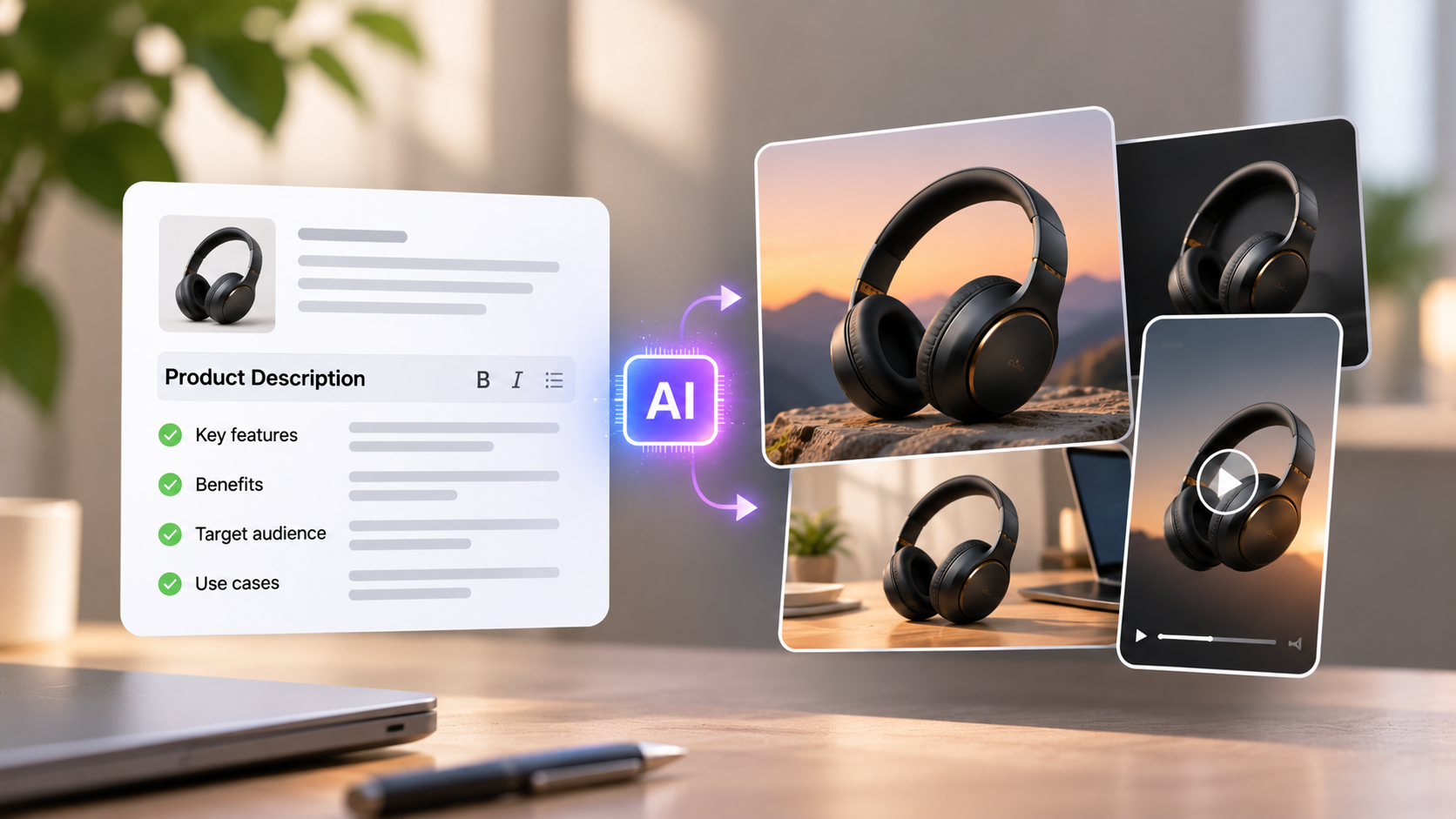
Automating Product-Based Ad Creative Production
AI can use existing product descriptions and brand assets to produce advertising drafts across multiple categories. Reusable templates help maintain a consistent structure while allowing each product's benefits to remain distinct.
Creating AI Image and Video Ads at Scale
AI tools can help transform product photographs and descriptions into promotional images, animations, and short videos. This allows brands to prepare content for several campaigns without organizing separate production processes for every variation.
Supporting Creative Automation and Campaign Efficiency
Automation can assist with resizing assets, generating alternative copy, and preparing content for different placements. Depending on the software, integrations may also simplify product information imports and creative exports.
Using AI Advertising Tools to Support Performance Marketing
Performance marketing depends on understanding which advertisements contribute to sales. AI helps businesses produce creative options for testing, while campaign analytics reveal which messages and formats are worth prioritizing.
Combining efficient production with reliable performance tracking makes advertising decisions more informed.
Read more: AI Advertising for Ecommerce: Best Practices
The Future of AI Ad Creatives in Ecommerce Marketing
AI ad creatives are becoming a practical part of ecommerce marketing as businesses look for faster ways to promote products. Improvements in image generation, video production, and ecommerce integrations may make it easier to transform product information into advertising content.
However, creating more advertisements doesn't automatically improve results. Brands still need clear messaging, accurate product details, and consistent testing to understand what works.
For businesses looking to simplify creative production, Leapify is worth exploring as part of an AI-powered advertising workflow. Using the right tools can help reduce manual tasks and make it easier to develop advertising content around your existing product information.
Ready to turn your product descriptions into engaging advertisements? Sign up for Leapify and explore a simpler way to create AI ad creatives for your ecommerce campaigns.
Frequently Asked Questions
What Are AI Ad Creatives?
AI ad creatives are advertising assets produced with the assistance of artificial intelligence. They can include promotional images, videos, headlines, captions, and product-focused marketing content. Businesses use them to simplify production and create variations for testing.
Can AI Turn Product Descriptions Into Advertisements?
Yes. AI advertising tools can transform product descriptions into promotional copy, image concepts, and videos, depending on their capabilities. Accurate product information and clear creative instructions help generate more relevant results.
How Do I Create AI Ad Creatives From a Product Description?
To create AI ad creatives, enter your product description into an AI ad creative generator, specify your audience and preferred format, and generate advertising concepts. Customize the results, verify product details, and test the approved advertisements.
What Is the Best AI Ad Creative Generator for Ecommerce?
The best AI ad creative generator depends on your advertising needs, budget, and preferred platforms. Compare tools based on image and video capabilities, editing flexibility, output quality, and ecommerce integrations.
Can AI Generate Both Image and Video Ads From Product Descriptions?
Yes. Some AI ad creation software can generate promotional images and videos using product descriptions, photographs, and creative instructions. Available features vary, so check supported formats and editing capabilities before selecting a tool.